How to propose in Santorini, step by step
Proposing in Santorini works best as a plan built backward from the sunset minute. Pick the week for light and crowds, lock the spot and photographer six to eight weeks out, land two days before the question, and keep the moment itself thirty minutes before the sun touches the horizon.
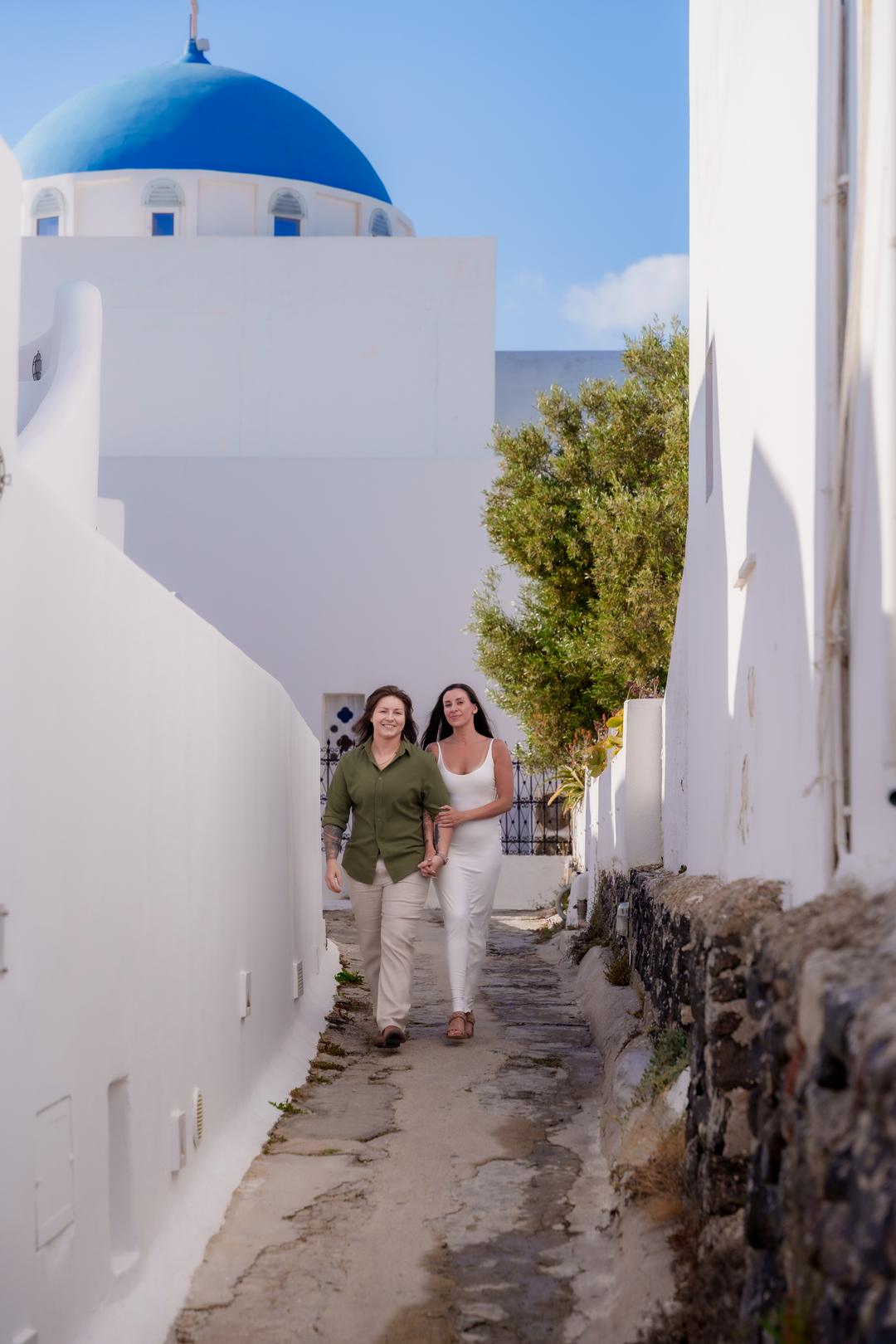
Every season, some traveler stands at a rail with a ring in one pocket and a phone in the other, watching the sun accelerate toward the horizon while their photographer idles at the wrong windmill. Nothing about the evening was hard; it was only unsequenced. The cure is embarrassingly simple: a proposal is planned backward. You fix the minute the question should land — about half an hour before the sun touches the sea — and let every other decision fall out of that one anchor. Here is the whole sequence.
The eight steps, dated
| When | The decision | Who carries it | Compare |
|---|---|---|---|
| 8+ weeks out | Week chosen for light and crowds; setting type decided (public / reserved / private / exclusive) | You, with the guides | |
| 6–8 weeks | Spot plan fixed; photographer booked; weather alternative written | You + planner or photographer | |
| 4 weeks | Venue reservation and styling confirmed with setup windows | Planner or you + venues | |
| 2 weeks | Ring logistics solved; outfits chosen for wind and marble | You | |
| 3 days | Provisional wind read; vendors reconfirmed — the final call lands on the morning itself | Planner, or you with discipline | |
| Day-of, morning | Final confirmations; venue walk-through | Planner | |
| T-minus 45 min | In position, unhurried; photographer already in cover | You, walking slowly | |
| T-minus 30 min | The question, in full warm light | You alone |
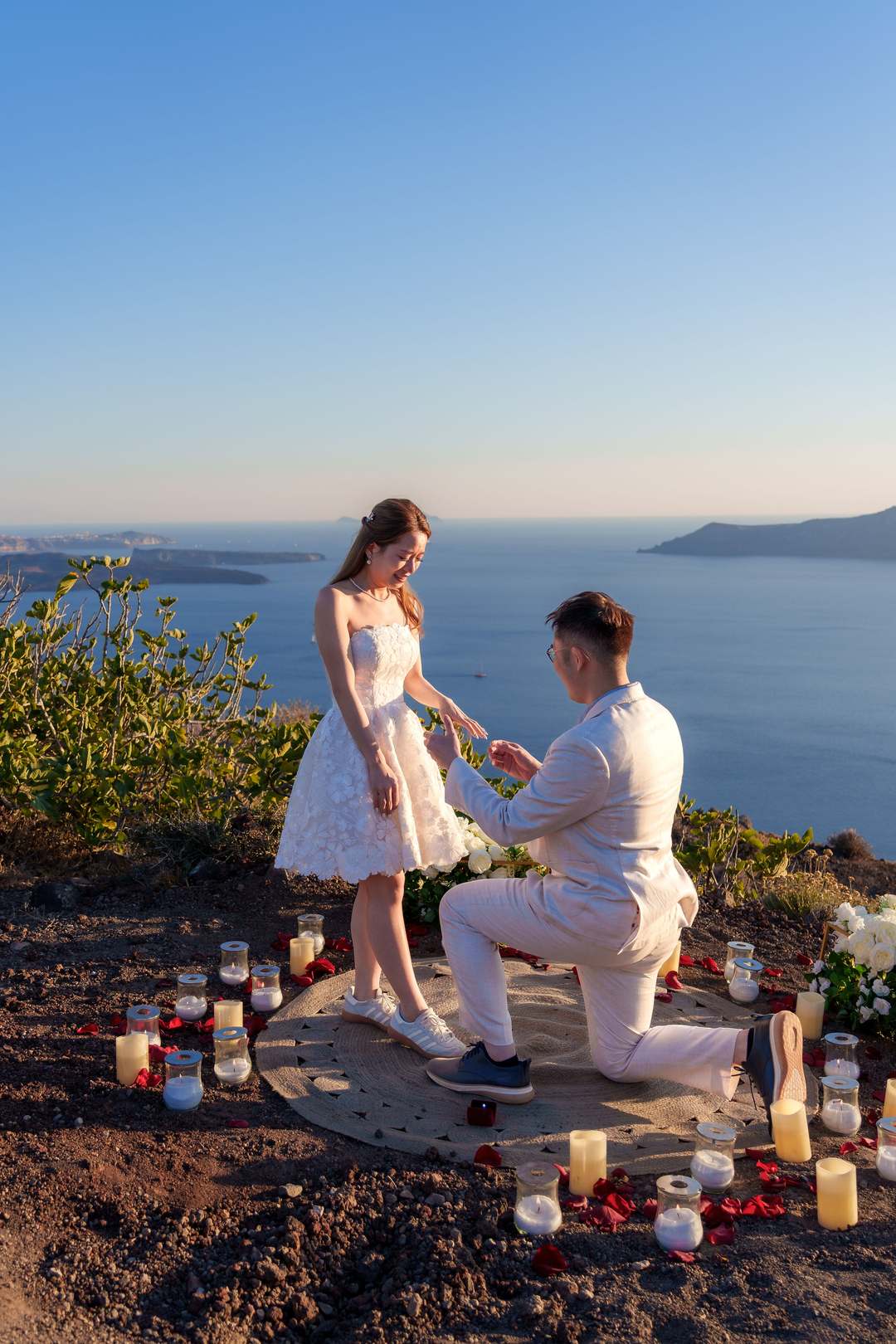
Why thirty minutes before sunset, not at it?
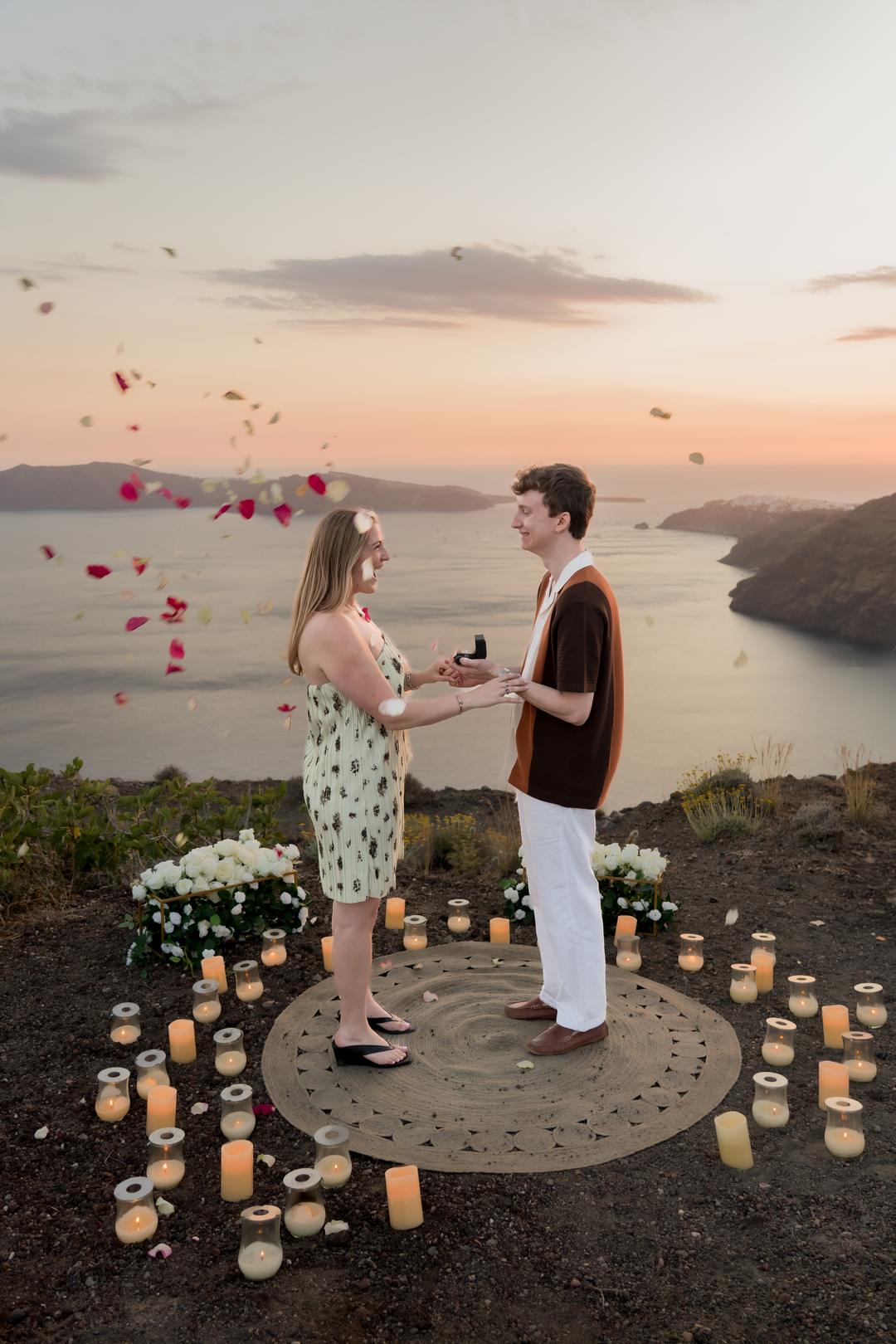
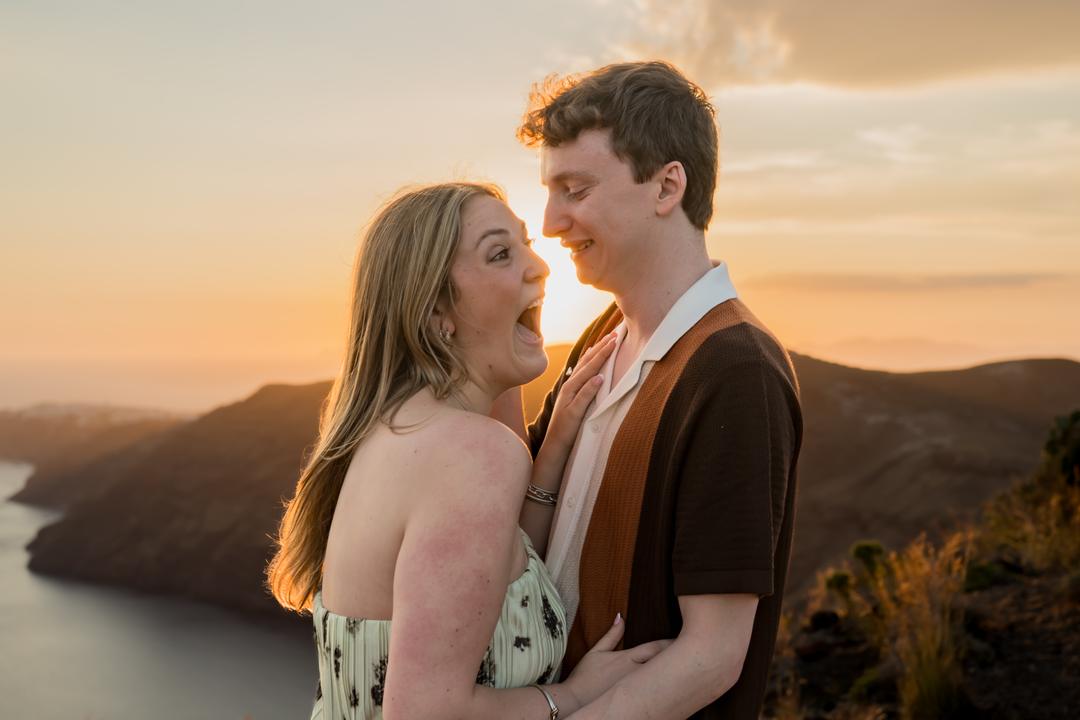
Because the sunset minute is the worst-lit famous minute of the day. At the drop itself, faces fall into shadow while the sky blows out behind them; twenty to forty minutes earlier, skin holds gold, the ring catches real light, and you still have the entire descent and afterglow left to celebrate through. Check your month's numbers in the sunset table and put the question at the arrive-by-plus-fifteen mark. Photographers have argued this exact point since cameras came to the island; every one of ours agrees.
Which decisions deserve the most care?
The week. More than anything else, dates decide the evening you get. The trade-offs by month — crowds, wind, venue pricing, light odds — are mapped honestly in the best-time guide.
The setting tier. Public rail, reserved corner, private terrace, exclusive venue: each step up buys certainty and costs money. The cost guide prices all four tiers with worked examples so the choice is a decision, not a discovery.
The photographer. The single non-negotiable. Everything else on the evening is optional by comparison, because everything else can be remembered — only the coverage can be lost permanently.
The words. Not a speech, a structure: memorize your first line and your last line and trust the middle. Three frameworks that survive nerves live in the what-to-say guide.
Where couples get the timing wrong
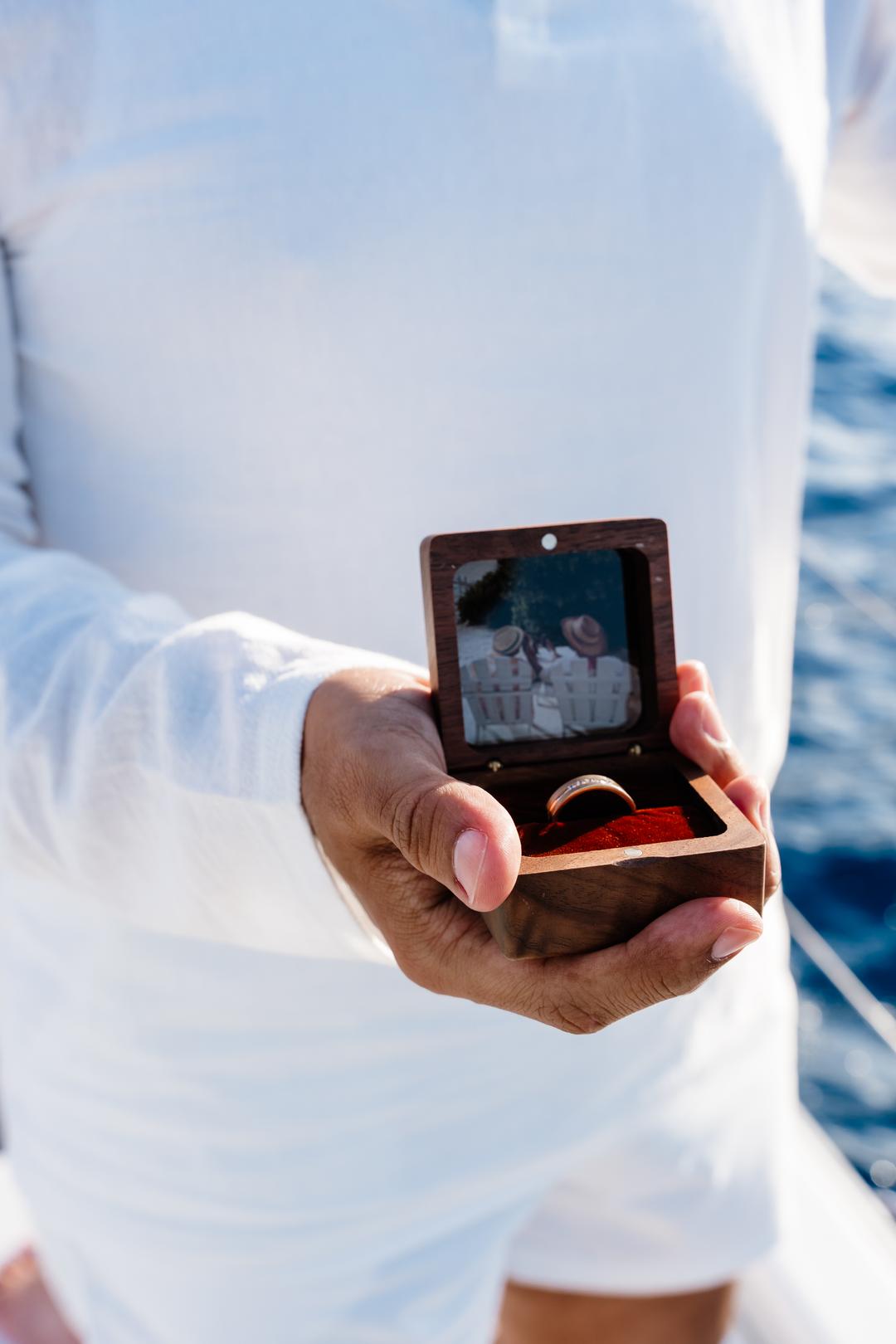
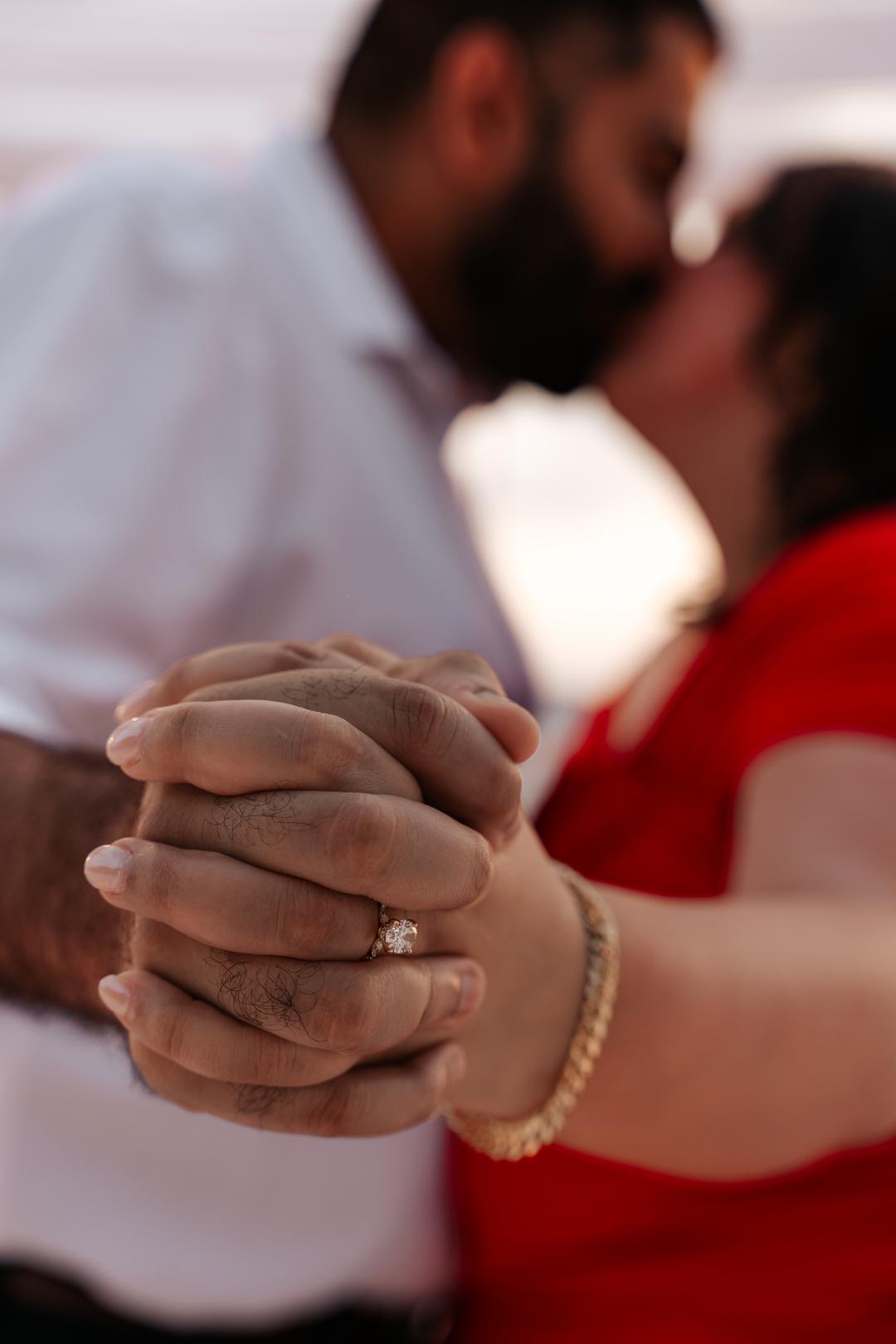
Read the failure catalog and you will notice a pattern: almost every ruined proposal on this island broke at a step this sequence makes explicit — the ring in a checked bag (step five, and the full ring-travel procedure), the un-checked forecast (step six), the sprint to the rail at sunset minus five (step seven). The timeline is not bureaucracy; it is the collected anatomy of what goes wrong, inverted.
Run it yourself with this page open, or hand the whole machine to us: a planner executes exactly this sequence with your name on it, and every package is this timeline with the vendors pre-assembled. Either way, when the week is chosen, tell us the date and we will tell you what is possible on it.
The planning questions underneath
How many days should we spend on the island around the proposal?
Four nights is the sweet spot. It gives the question a second-choice evening if weather interferes, a free day before for scouting-by-strolling, and a celebration day after that is not also a travel day. Three nights works with discipline; two forces the proposal onto a fixed evening with no fallback.
Is proposing on our arrival day a bad idea?
Usually, yes. Delayed ferries and flights are common enough that hanging the most important minute of the trip on same-day travel is a needless gamble, and you will be tired in every photograph. Give yourselves one full day of margin; the island rewards the pause anyway.
How do I keep the plan hidden when we share one suitcase?
Move the evidence off paper and off the shared screen: bookings in one email account your partner never sees, notifications silenced for the trip, the ring travel plan handled per our ring guide. On the island, all coordination runs through one WhatsApp thread that behaves — silent hours, no pop-up previews.
Should we tell our families before the trip?
Tell the minimum circle that keeps you sane, and give each person one explicit instruction: nothing online, nothing hinted, until the couple posts first. The leak pattern is never malice — it is an excited parent replying to an innocent photo with a congratulations two days early.
What actually happens if it rains?
On this island, rain is rare and brief from May through September and the answer is usually a shifted hour, not a lost evening. Outside those months, every good plan carries an interior alternative with caldera glass. A grey sky, for what it is worth, often photographs more dramatically than a clear one.
Tell us the date. We will hold the light.
One conversation is enough to know whether we are the right house for your proposal. No pressure, no scripts — just an honest read on your dates.
Prefer to write first? WhatsApp us at +30 694 4803339 — a planner replies, not a bot.