The day nobody has to hide
A Santorini elopement photographer documents a whole ceremony day in chapters, dawn to dinner, where a proposal photographer works one concealed hour. Coverage moves through getting ready, the walk to the ceremony, the vows, the signatures when the day is legal, and the first dinner as married people — documentary throughout, directed only in minutes.
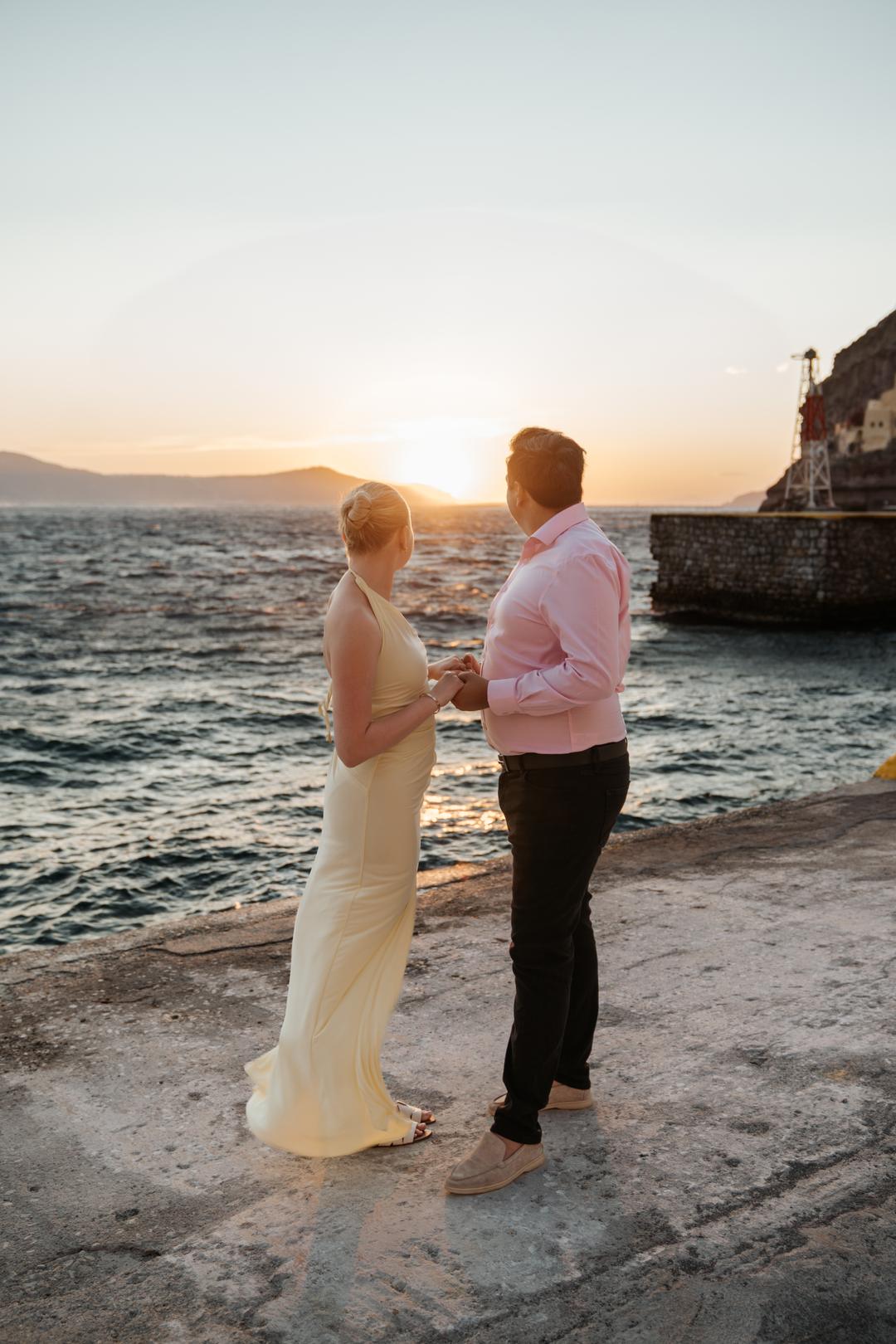
A proposal is a minute with a before and an after; an elopement is a day with chapters. That difference is not poetic garnish — it changes the photographer's entire job. The proposal photographer compresses everything into one concealed window and then vanishes. The elopement photographer does the opposite: expands across a day nobody hides, from a quiet room at first light to a table for two after dark, building a record with a beginning, a middle, and an earned ending. This page explains how that day gets covered, chapter by chapter, and why a two-person wedding is the most photographable format this island offers.

The dawn-to-dinner arc
Getting ready
There is no crowd of matching robes and no hair-team choreography — one room, morning light, two people dressing for each other. The camera works quietly: the dress against a whitewashed wall, hands closing a clasp, the last unhurried look in the mirror. These frames anchor the record because they show the day before it knew it was a wedding.
The walk to the ground
On Santorini the walk is not logistics, it is a scene: lanes, steps, a hem gathered in one hand, strangers offering applause nobody requested. The photographer moves ahead and behind, letting the island do the composing. Couples forget this chapter is happening, which is exactly why its frames feel like memory rather than documentation.
The vows
Here the camera goes silent and stays out of the way. Wide first — two figures, one ledge, the caldera holding its light — then close, for the hands, the trembling page of vows, the face of the one listening. Nothing is directed during the words themselves. Whatever happens is what the record keeps, and it is always enough.
The signatures, if it is a legal day
A legal day includes an unglamorous half hour: an office, a registrar, a pen that will outlast every flower on the island. It gets photographed with the same seriousness as the vows — the signature mid-stroke, witnesses leaning in, the stamped page — because in thirty years this is the chapter that proves the rest was real.
The first dinner
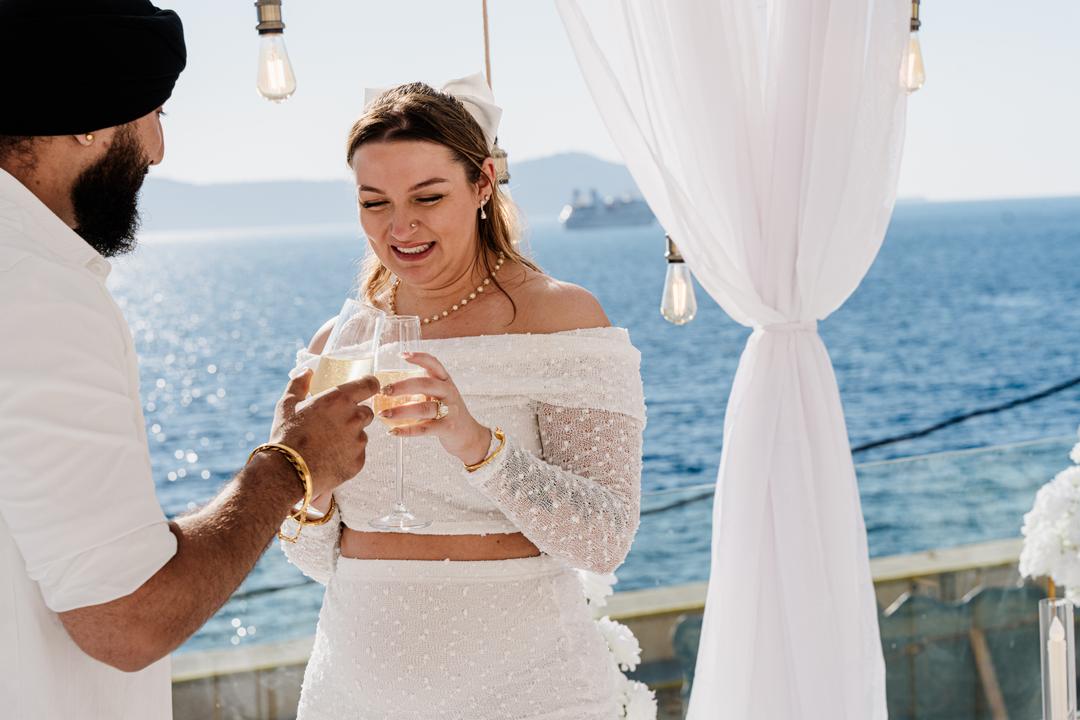
The day exhales at a table set for two. Coverage stays through the arrival, the first glasses raised as married people, the ring catching candlelight — and then it withdraws, on purpose, leaving the last hour of the evening entirely yours. A record should know where it ends; ours ends just after the toast.
Five chapters, one photographer, no shot list taped to a clipboard. The chapters are a shape, not a script — some days add a boat, some days subtract the paperwork — but a record built in this order does something a highlight reel cannot: it gives you back duration, not just peaks. A day measured in chapters, not minutes.
Documentary or directed — what does a day like this need?
Mostly documentary, with direction confined to minutes you can count on one hand. Compare the sibling craft: a secret proposal rides on a single engineered window — typically 75 to 90 minutes end to end — and its photographer's art is concealment, a method laid out in full on the proposal photography page. An elopement hands the camera the opposite conditions: hours instead of a window, permission instead of secrecy, a couple free to look straight down the lens whenever they feel like it. So the working ratio inverts. You are directed for one short portrait stretch in the day's most flattering light — a step toward the wall, a slower walk, nothing you would call posing — and observed for everything else. The frames couples end up loving most come from the observed hours, because a day this small keeps producing scenes no one thought to plan.
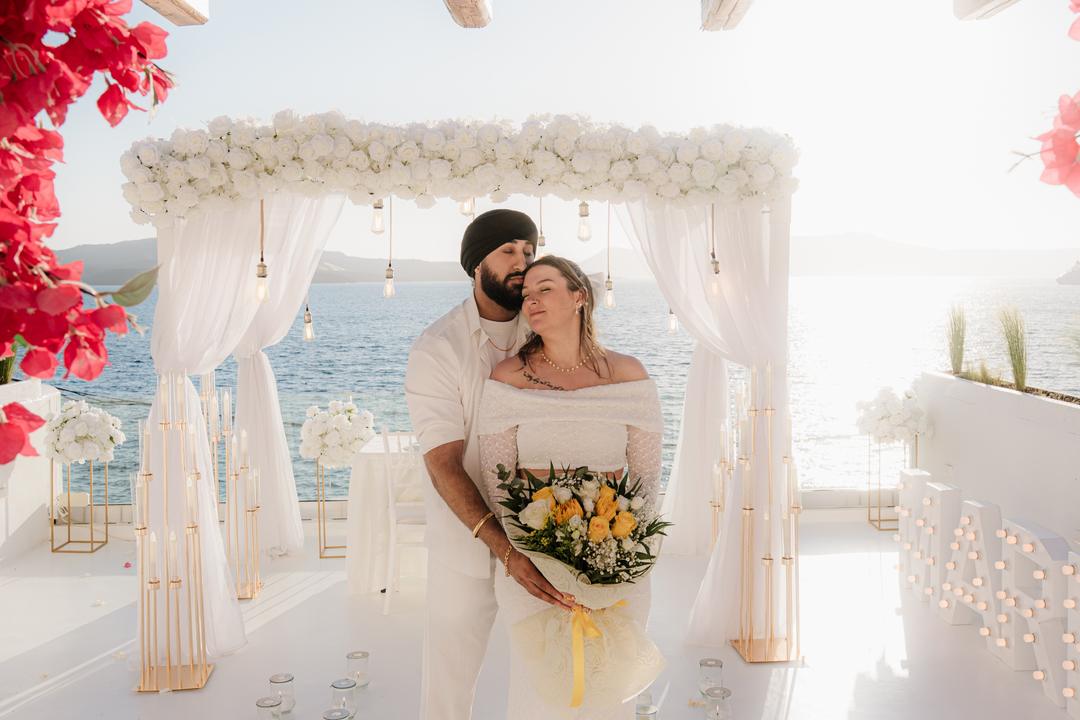
The light plan across a whole day
An hour-long session lives or dies on one slot of light. A day-long record gets to use all of it. Morning is soft and directional — shutters half-open, white walls acting as reflectors, the getting-ready chapter at its kindest. Midday is honest: high, flat, unsentimental, which is precisely why it suits the administrative chapter — a signature does not need romance, it needs legibility. Late afternoon begins the descent toward the golden close, where the vows or the portrait walk belong, and blue hour hands the first dinner its candlelight. None of this asks you to memorize times; it asks for a photographer who sequences the chapters so each one meets the light that flatters it. That sequencing is most of the planning conversation, and it is settled before you land. Who runs that conversation — and how it interlocks with the legal chain on a day that is also a legal one — belongs to the planner's own page.
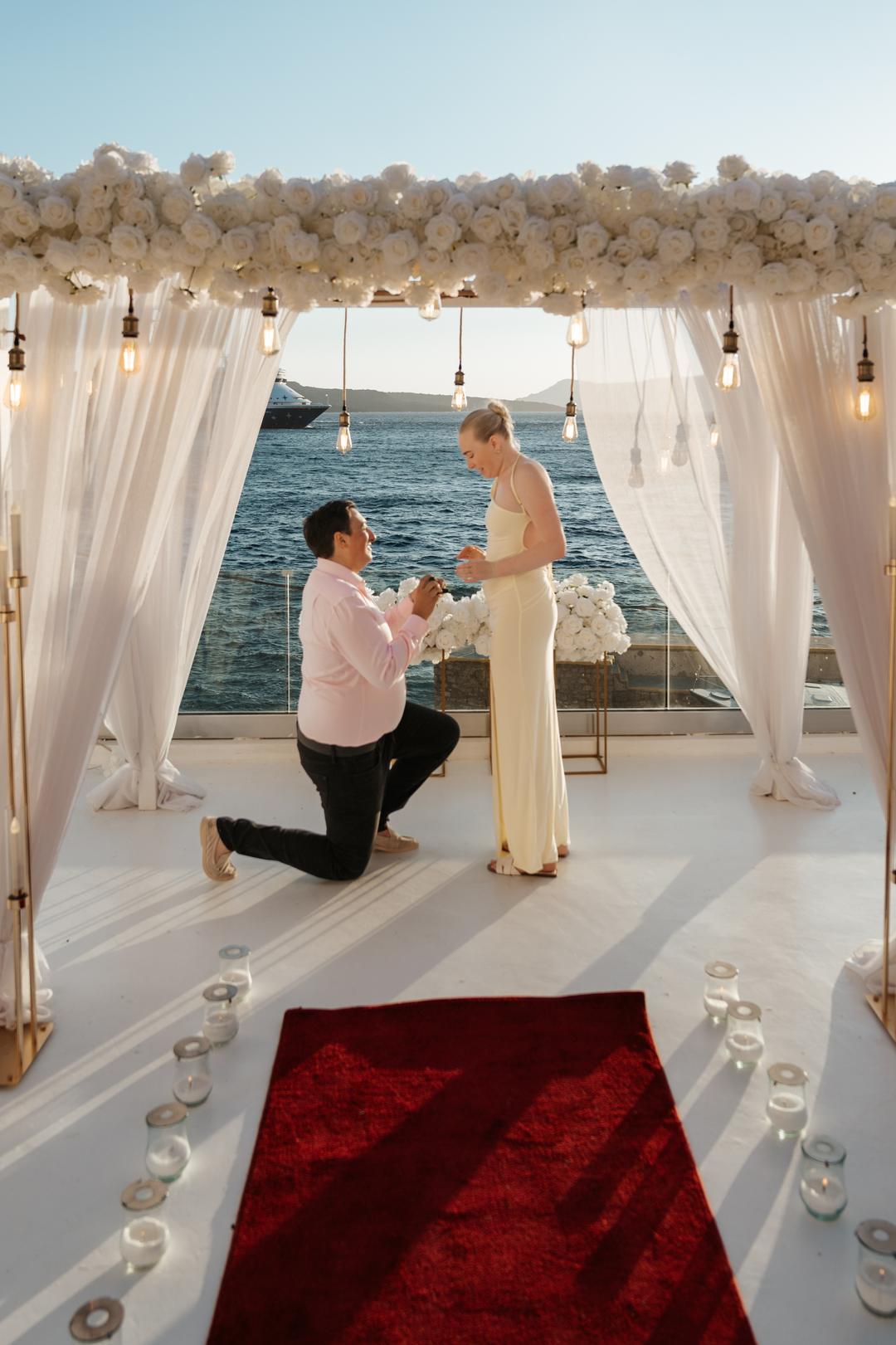
What two-person days allow that hundred-person days never do
A wedding with a guest list runs on a schedule; a wedding with two people runs on attention. If the wind turns, the day re-routes without a single phone call. If the light goes extraordinary at an unplanned hour, you chase it. Vows can happen on a ledge no seated ceremony could ever reach, and dinner happens when you are hungry rather than when a caterer is ready. For the camera, this freedom is the entire prize: every chapter can be moved into its best conditions, a luxury the full wedding format — for all its own rewards, laid out on the weddings page — structurally cannot offer.
The elopement overview covers the ceremony side of the day, symbolic against legal included; the elopement packages page puts numbers to coverage and everything around it; and the gallery shows what finished sets look like when a whole day, not a single hour, sits inside them.
One day, five chapters, plain answers
Which chapters of an elopement day get photographed?
Five by default: getting ready, the walk, the vows, the signatures when the day is legal, and the first dinner. The plan flexes to your actual day — a swim can replace the dinner, a catamaran can replace the walk — but the shape holds: a beginning, a middle that matters, and a close, covered in order, without staging.
Can one day hold a symbolic ceremony and a legal signing?
Yes, and the light cooperates. The civil signing sits inside daytime office hours; symbolic vows belong to the last hour of sun. One photographer carries both without changing approach — the paperwork receives documentary respect, the vows receive the island's best light, and the finished set reads as one continuous day rather than two events stapled together.
What does getting ready look like when the wedding party is two people?
Quieter and, honestly, better on camera. Nobody performs for a room because there is no room — just the two of you, or each of you separately if you are keeping a first look. The photographer arrives for the final stretch, works small and close, and leaves the earlier, private part of the morning deliberately unphotographed.
How discreet is coverage at the town hall?
One photographer, no flash, nothing beyond a shoulder bag. Positions defer to the office and its staff — municipal rooms are workplaces, and coverage that behaves earns better access than coverage that performs. The frames come from the edges: the corridor wait, the pen changing hands, the two of you on the steps afterward holding the paper.
How does an elopement set differ from a proposal set?
A proposal set climbs toward a single crest — the question, the yes, the minutes right after — and every frame orbits that peak. An elopement set reads like a short book: chapters in different light, different places, different registers of feeling. One is the portrait of a moment; the other is the portrait of a day, and you will return to them differently for the rest of your lives.
Tell us the date. We will hold the light.
One conversation is enough to know whether we are the right house for your proposal. No pressure, no scripts — just an honest read on your dates.
Prefer to write first? WhatsApp us at +30 694 4803339 — a planner replies, not a bot.