A Santorini civil wedding, and where the state stops
A Santorini civil wedding is a legally binding marriage performed by a municipal official and recognized at home. The civil route needs the full document set, apostilled and translated, and that clock runs eight to twelve weeks. Greece asks for no residency and imposes no waiting period once the license is issued.
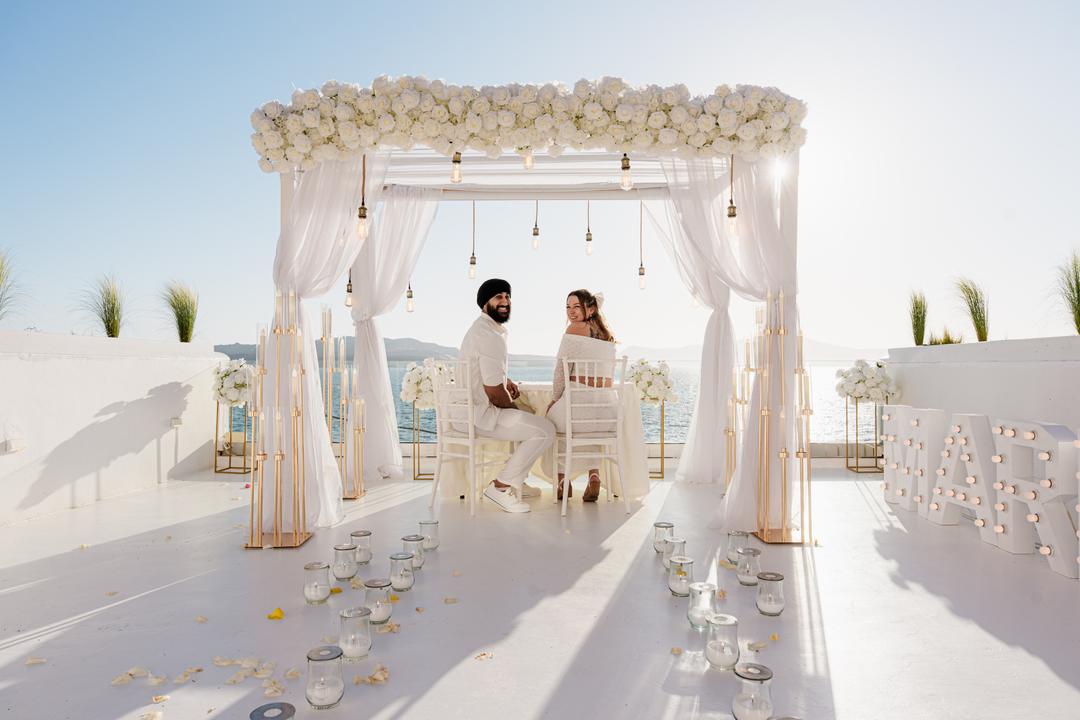
Most of what couples dread about marrying legally in Greece turns out to belong to the weeks before the flight, not to the day itself. The ceremony is short, warm, and almost entirely yours to shape. The file that permits it is where the real work sits, and it is work that rewards starting early far more than it rewards being clever.
Is a Santorini civil wedding legally valid at home?
Yes, and the mechanism is worth understanding because it explains the whole document burden. A civil ceremony on Santorini is performed by an official of the municipality, which makes it a marriage under Greek law from the moment it is declared. Your home country then recognizes that marriage through the apostille convention, the same instrument that authenticated your birth certificates on the way in. The paperwork is not bureaucratic theater. It is the thing that makes the marriage portable.
Two consequences follow. The first is that a Santorini civil wedding is not a lesser version of marrying at home; it is the same legal act, performed somewhere better lit. The second is that the certificate arrives in Greek, three to four weeks after the ceremony, and most registries at home will want a certified translation before they file it. That is the last chore, and it is worth budgeting for at the start rather than discovering in October.
What the municipality decides, and what you do
Couples arrive expecting the state to control the shape of the day. It controls less than that, and it controls it in specific places. Here is the line, drawn where it actually falls.
The municipality decides
- That the file is complete before a date is confirmed
- When the license issues — seven to ten days after the file is accepted
- How long that license lasts — six months, which is generous enough to absorb a moved date
- That an official attends, and that the ceremony is conducted in Greek
- That the certificate is issued in Greek, three to four weeks afterward
You decide
- The setting, subject to municipal approval of the venue
- The hour, which on this island means the hour the light is right
- Whether anyone else is present at all
- What is said beyond the legal words, in whatever language you think in
- Whether the legal act and the ceremony you remember are the same moment
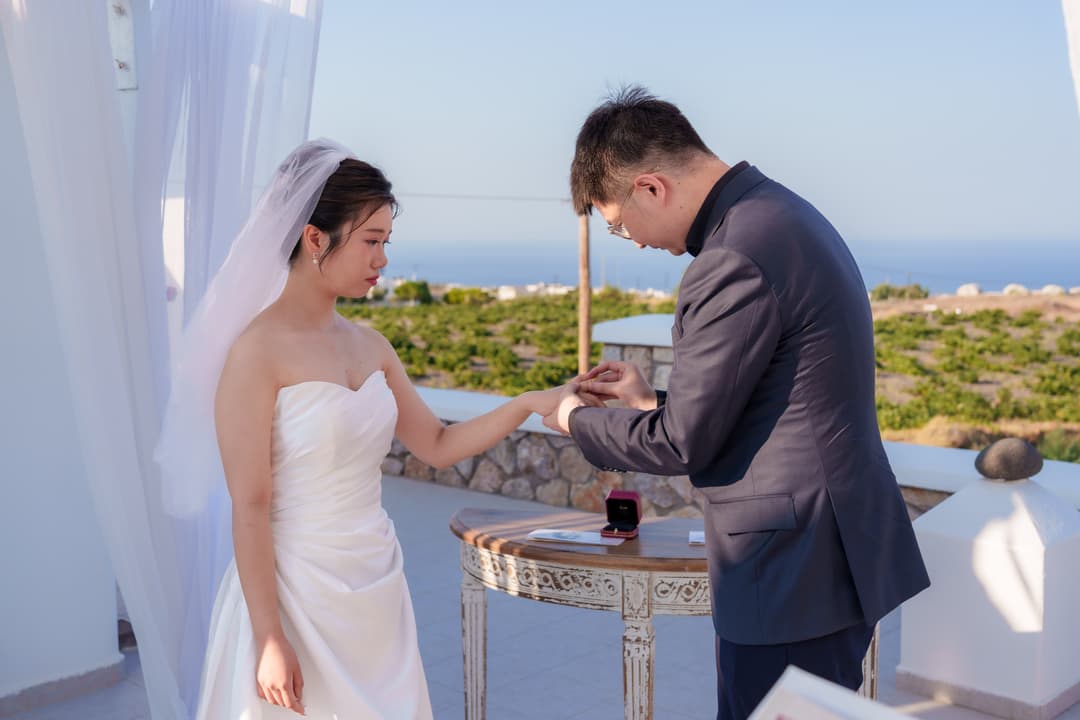
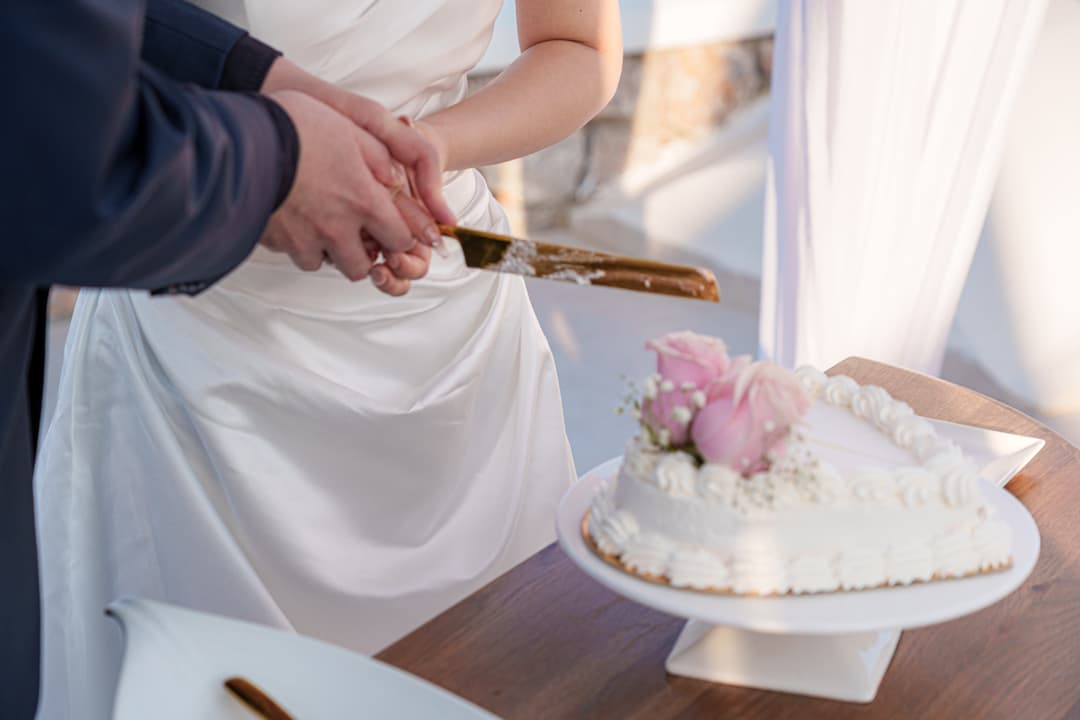
That last line on each side is the one couples underestimate. The official's words are fixed and Greek; everything you would actually want quoted back to you in thirty years is yours to write, and it usually happens in a second, unofficial moment immediately after. Plan both. The full document clock and the ceremony comparison sit on the weddings guide, and the practical difference between a legal and a symbolic ceremony is argued at the symbolic route.
Who the civil route actually suits
A civil ceremony suits couples for whom the legal act and the trip should be the same event: nobody wants a registry-office appointment at home three weeks before flying, and nobody wants to explain to a parent that the wedding they attended was not the wedding. It suits couples marrying across nationalities, because the apostille route is well worn and produces a document set that works in both directions. It suits anyone who would rather do the administrative work once.
It suits you less if your document set is complicated, your date is inside eight weeks, or one of you holds a nationality whose civil-status paperwork is slow to obtain. In those cases a symbolic ceremony on the island and the legal act at home is not a compromise, it is the sequencing that gets you a better day. We will say which one you are in when we see the two passports.
Request your document checklist
We do not publish a document list, and you should be wary of any Santorini site that does. The requirements differ by the nationality of each partner and they change without announcement, so a static list is wrong for somebody on the day they read it. Tell us both nationalities and the date you have in mind and we will send back the set that applies to you, with the order to obtain them in and the point at which each one expires.
The civil route, answered plainly
Is a Santorini civil wedding legally valid in our home country?
A civil ceremony performed by a Greek municipal official is a full legal marriage, and it is recognized abroad through the same apostille system that authenticated your documents on the way in. You are married from the moment the official declares it, not from the moment the certificate arrives. The certificate itself is issued in Greek roughly three to four weeks later, and most countries want it translated before they will register it.
Do we have to live in Greece first, or wait after arriving?
Neither. Greece imposes no residency requirement on foreign couples marrying civilly, and there is no waiting period between arriving and the ceremony once your license has been issued. That license takes seven to ten days to come through after the municipality accepts your file, and it stays valid for six months, so the pressure sits entirely in the paperwork phase rather than in your travel week.
What language is the ceremony held in?
The municipal official conducts the ceremony in Greek, because that is the language the state marries you in. An interpreter attends when neither of you speaks it, and the vows you actually want said aloud are usually spoken separately, in your own words and your own language, immediately afterward. Couples who care about how the ceremony sounds should plan for two moments rather than one.
Can a civil ceremony happen anywhere on the island?
Close to it, but the municipality has to approve the setting, and approval is easier at venues that have hosted civil ceremonies before. A private terrace, a villa, a winery and most caldera venues are all workable. Somewhere the official has never been asked to attend takes longer to clear, so tell us the setting early and the file gets built around it.
How does a civil wedding differ from what we book as a package?
The ceremony type is a configuration inside a package, never a separate product. The same three wedding floors host a civil ceremony, a symbolic one, or an Orthodox one, and the price does not move with that choice. What moves is the paperwork: a legal ceremony adds document handling and municipality filing, which we quote separately because it depends on both your nationalities.
Tell us the date. We will hold the light.
One conversation is enough to know whether we are the right house for your proposal. No pressure, no scripts — just an honest read on your dates.
Prefer to write first? WhatsApp us at +30 694 4803339 — a planner replies, not a bot.