The planning mistakes that undo Santorini proposals
Santorini proposal mistakes repeat in patterns. They are the ring in checked luggage, the question saved for after dessert, candles on an exposed rail, a famous viewpoint at peak hour with no fallback, and secrets leaked by geotags. Every one is preventable, and each pattern below comes with the fix that saves it.
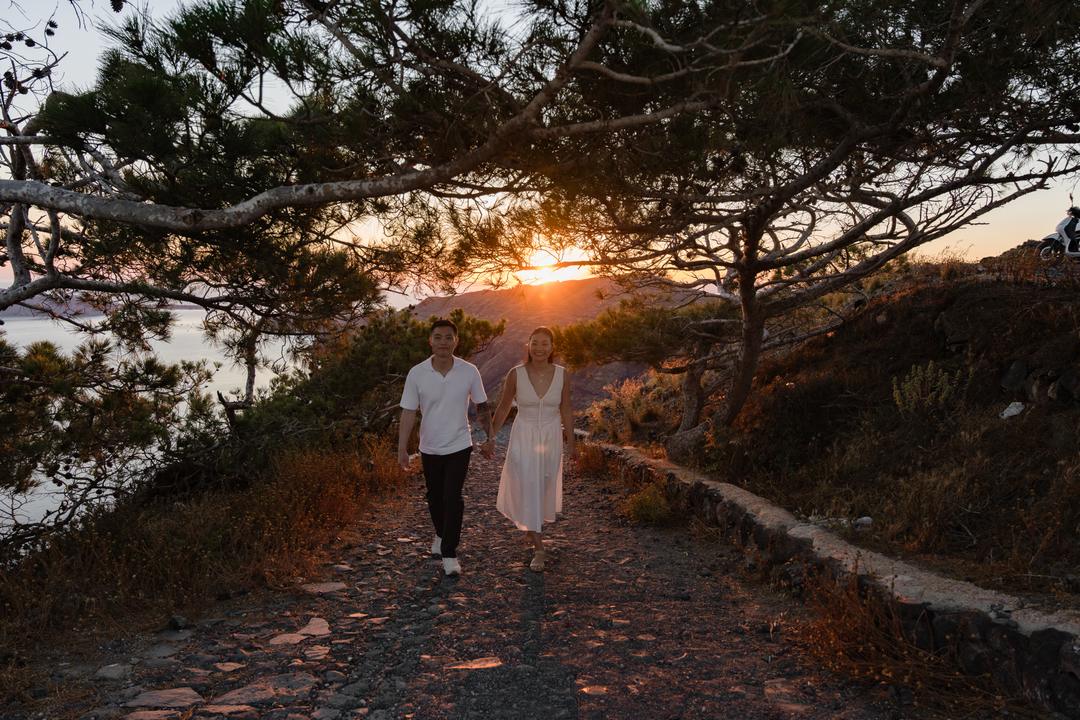
Every August, somewhere on this island, a person stands at a packed viewpoint holding a ring box in a sweating hand, waiting for a clear moment that is not coming. Every June, a checked suitcase lands in Athens while its owner lands here, and the most important object in it is somewhere over the Aegean. The patterns repeat so reliably we keep a catalog — anonymized, composite, and instructive. Here it is, with the price of each failure and the fix that would have cost nothing.
This guide owns the weeks before. Every failure below begins as a decision made at a desk — a booking, a route, a suitcase, a message sent to the wrong person — and each one is still reversible while the date sits far away. What comes apart on the date itself, from the wind call to a vendor who never arrives, is a different discipline, and the day-of guide holds it.
The catalog
| The pattern | What it costs | The fix | Compare |
|---|---|---|---|
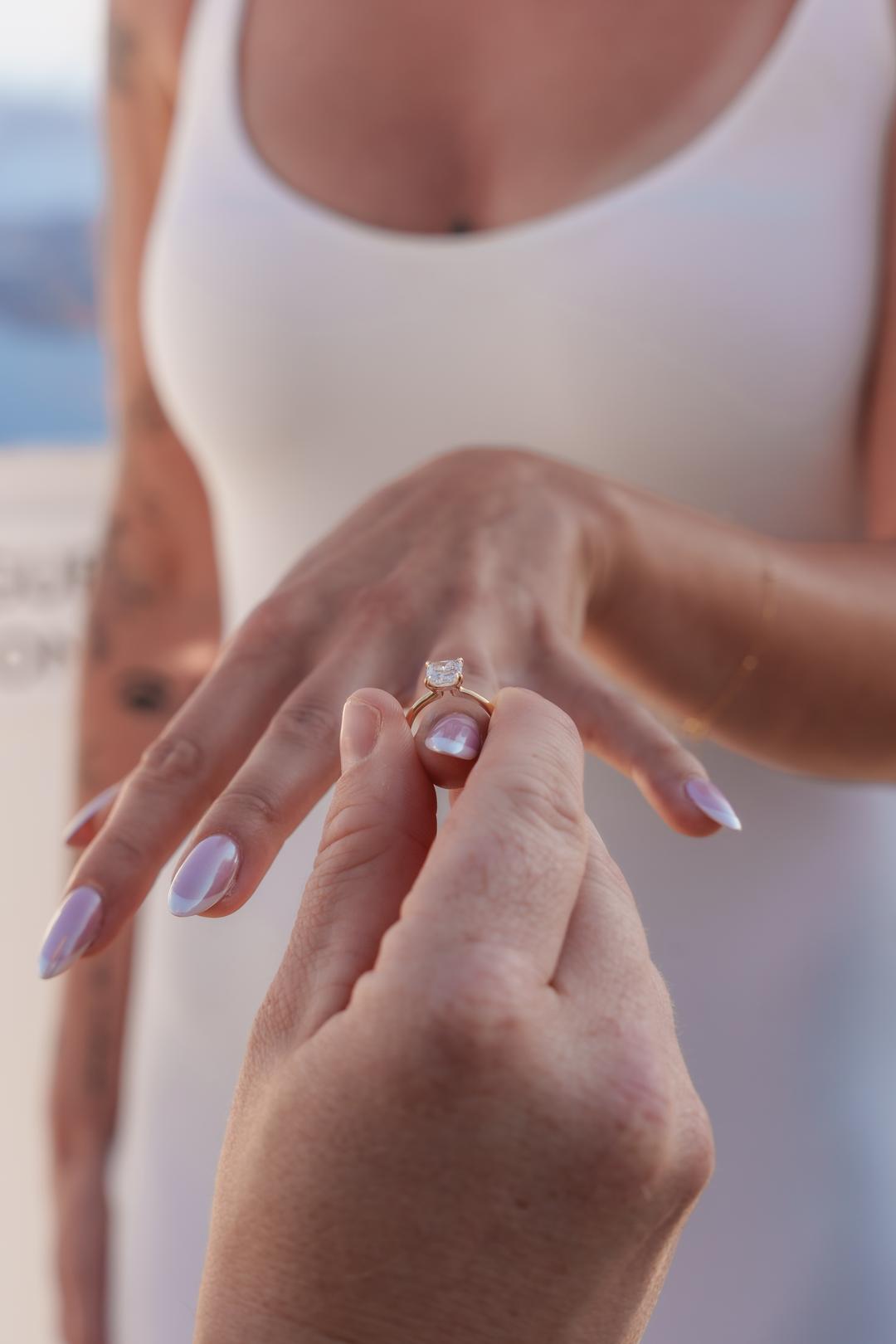
| Ring in checked luggage | Days of terror; sometimes the ring | On-body carry, always — the ring-travel drill | |
| Waiting until after dessert | Three courses of visible nerves | Ask before the starter; dine as celebration | |
| Peak-hour famous viewpoint, no fallback | An audience, or a downgrade in panic | Two marks per location, chosen in daylight | |
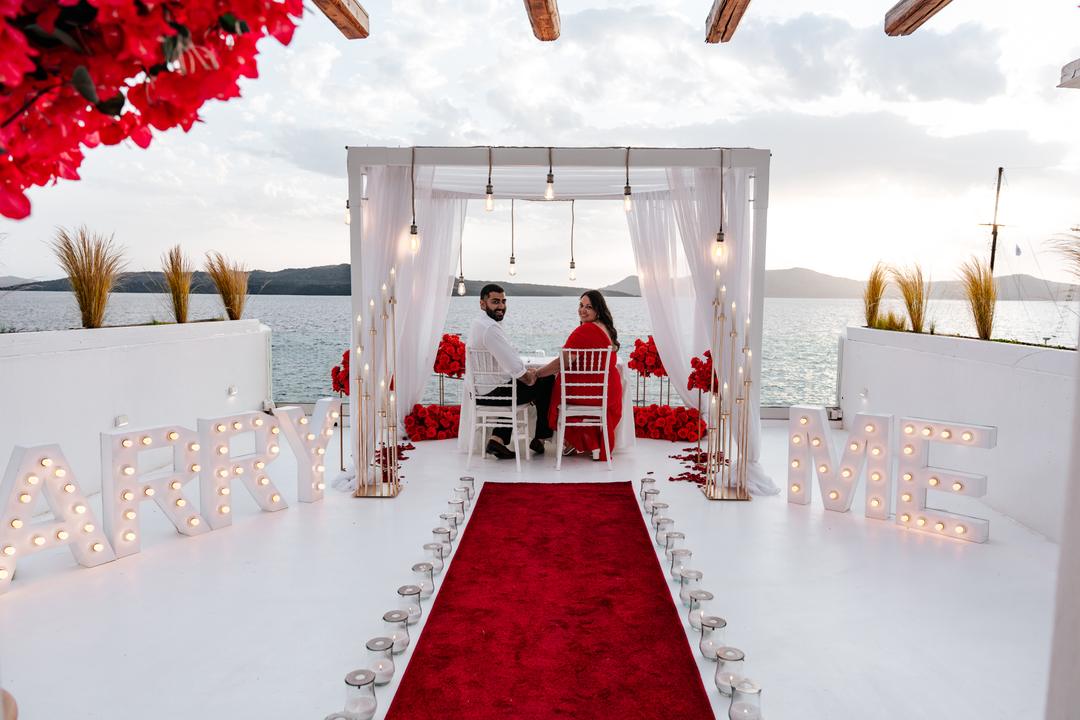
| Candles and petals on exposed rails | The scene, before you arrive | Glassed flame, anchored designs, sheltered ground | |
| The exact-sunset-minute obsession | Dark faces, blown highlights, rush | Ask 30 minutes early; keep the drop for the toast | |
| Geotagged scouting posts | A partner who knew by Tuesday | Post nothing located until after the yes | |
| The friend with a phone as photographer | 400 frames, none printable | One hidden professional for one hour | |
| Booking coverage for the wrong minute | A photographer at sunset for a dusk ask | Coverage anchored to your ask time, not the sun's |
Which three failures are worth dissecting?
The dessert deferral. It feels romantic to end the meal with the question; in practice the proposer tastes nothing, checks a pocket compulsively, and the partner spends an hour wondering what is wrong. The inversion — asking first — is so reliably superior that it governs our entire dinner choreography.
The crowd meltdown. The imagined empty rail exists at 16:00; by the golden hour it holds a modest nation. What rescues the evening is never charm or luck — it is the pre-chosen second mark thirty meters away, the one habit the hour-by-hour data in the Oia guide exists to teach. Season selection helps too: half these failures simply deflate outside peak weeks, as the calendar guide shows.
The pyrotechnic promise. A plan built around fireworks meets Greek law, venue liability, and summer fire risk — and collapses late, taking morale with it. The couples who read the legal send-off page first end up with endings that actually happen.
This catalog has a constructive twin: the fifteen habits that prevent all of it, collected in the field-advice guide. And the ring deserves its own procedure — how it travels is a solved problem. If reading failure analysis makes you wonder whether the island is worth the choreography, the skeptic's page answers honestly; if it makes you want the choreography handled, that is a package.
Failure analysis, continued
What is the single most common way plans fall apart?
Timing collapse at a famous viewpoint: arriving inside the final hour, finding the imagined spot occupied by two hundred people, and improvising somewhere worse while the light runs out. It is never one dramatic error — it is a chain of small optimism. The antidote is unglamorous: margin, a second mark, and a plan that survives contact with a crowd.
Do weather-related failures actually happen often?
Wind failures, yes; rain failures, rarely. Couples plan against rain because it is the weather they know from home, then watch a meltemi afternoon strip a petal setup or turn a clifftop conversation into shouting. The wind forecast deserves the attention the sky usually gets — and every decorated plan needs a sheltered version on paper before the trip. Writing that version is planning work, and it belongs on this page. Who makes the wind call on the day, and at what hour, is answered on the day-of guide instead.
How do surprises most often get spoiled?
Digitally and domestically. A shared inbox showing a booking confirmation, a story posted from the scouting walk, a hotel receptionist congratulating the wrong half of the couple at check-in. The countermeasures are boring and total: separate email, zero pre-posting, and a scripted cover story for anyone who must know anything.
If a proposal does go sideways, is the evening lost?
Almost never, if someone reacts instead of freezes. A crowded mark has quieter neighbors; a windy rail has a leeward terrace; a rain squall has an interior with glass. The moments couples remember as disasters are usually the unplanned pivots that worked — the actual loss happens when nobody had any second option at all.
Tell us the date. We will hold the light.
One conversation is enough to know whether we are the right house for your proposal. No pressure, no scripts — just an honest read on your dates.
Prefer to write first? WhatsApp us at +30 694 4803339 — a planner replies, not a bot.