Oia, one terrain at a time
SUNSET 5/5 · PRIVACY 2/5 · WIND EXPOSURE 3/5
Oia proposal spots resolve into four terrains — castle ruins, windmill row, Londsa rails, the walkway lanes — each carrying different wind and crowd. This page walks them one at a time: the ground, the shelter, the camera each one gives. The clock and the playbook stay on the village guide.
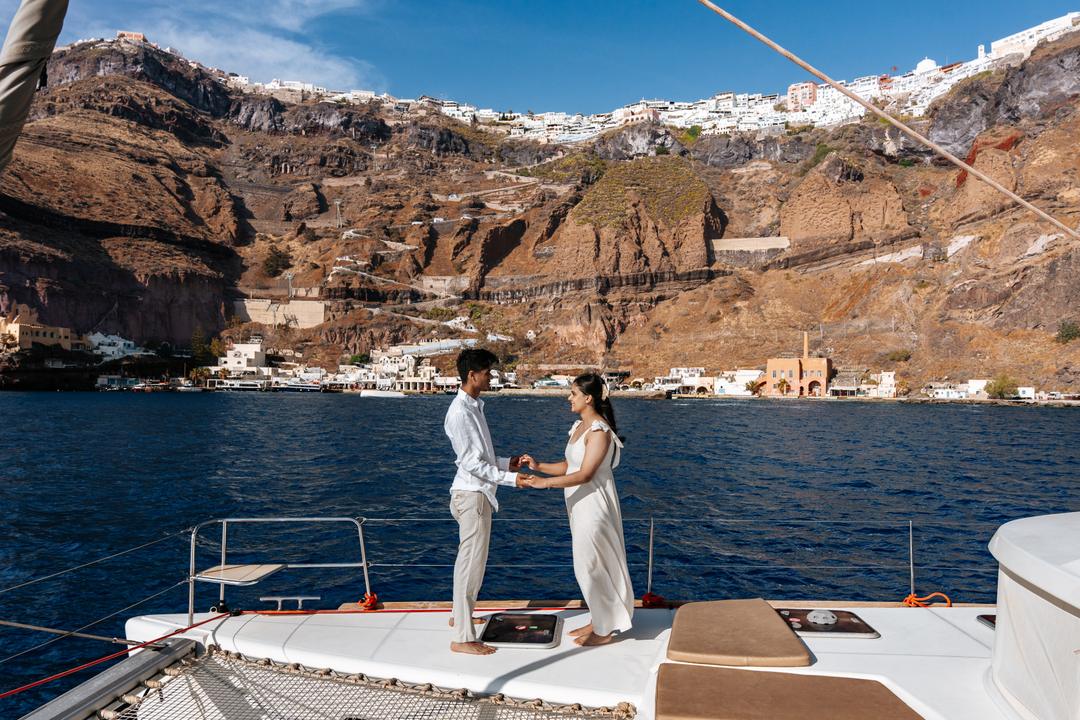
Oia is one name for four different stages. The castle ruins, the windmill row, the rails toward Londsa, and the lanes under the marble walkway share a postcode and almost nothing else: different ground, different wind, different audiences, different cameras. The playbook — the crowd curve, the arrival minute, the clock that runs the whole evening — lives on the Oia guide, and nothing here replaces it. This page is the other half of the file: the terrain itself, spot by spot, so that when the plan says move, you already know where you are standing and why. If you are still weighing villages rather than corners, the location index is the place to start.
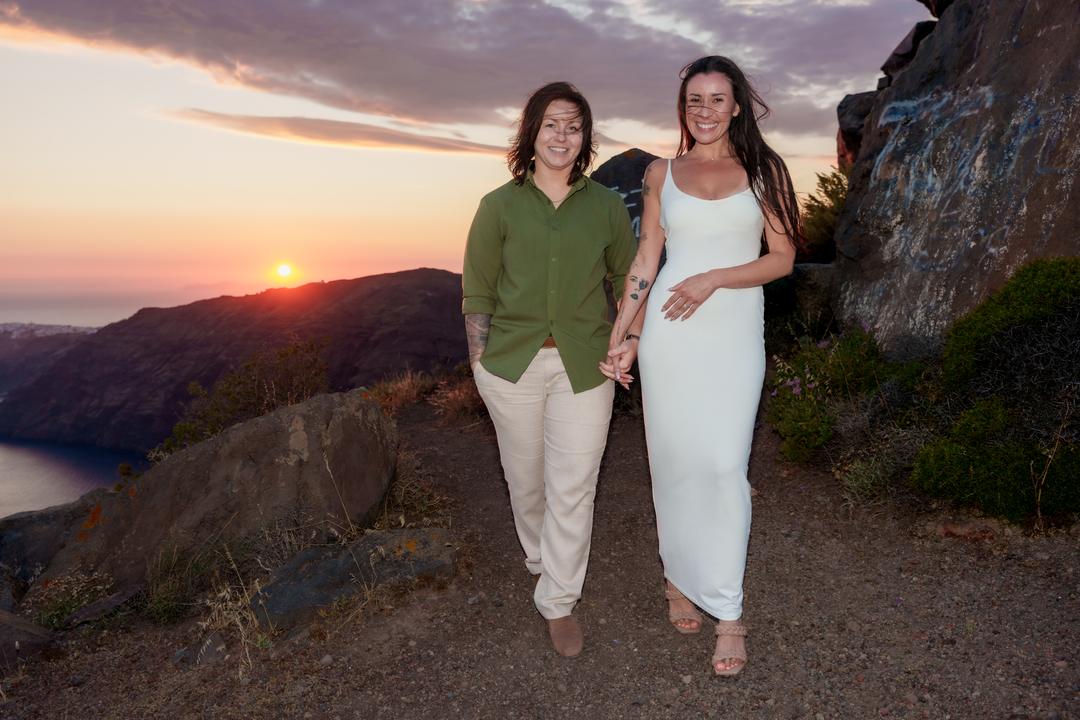
The four spots, walked in order
The Byzantine castle ruins
A ruined watchpoint at the village's western tip, which is why it sees the whole show: caldera to the left, open water straight out, the sun falling with nothing in its way. The ground is old fortification stone stepped into small terraces — uneven at the edges, polished wherever feet agree. It suits couples who want the reference view, the one every screensaver means, and who are prepared to buy it with timing rather than luck.
The register is blunt about this one: the famous spot, and the busiest. Its terraces start filling around ninety minutes before sundown from May to October, run shoulder to shoulder from roughly an hour out, and clear within about twenty minutes of the drop; a rail of your own means arriving some two hours ahead. Getting here is ten to twelve minutes on foot from the bus square, pedestrian marble the whole way.
The windmill row above the Ammoudi cliffline
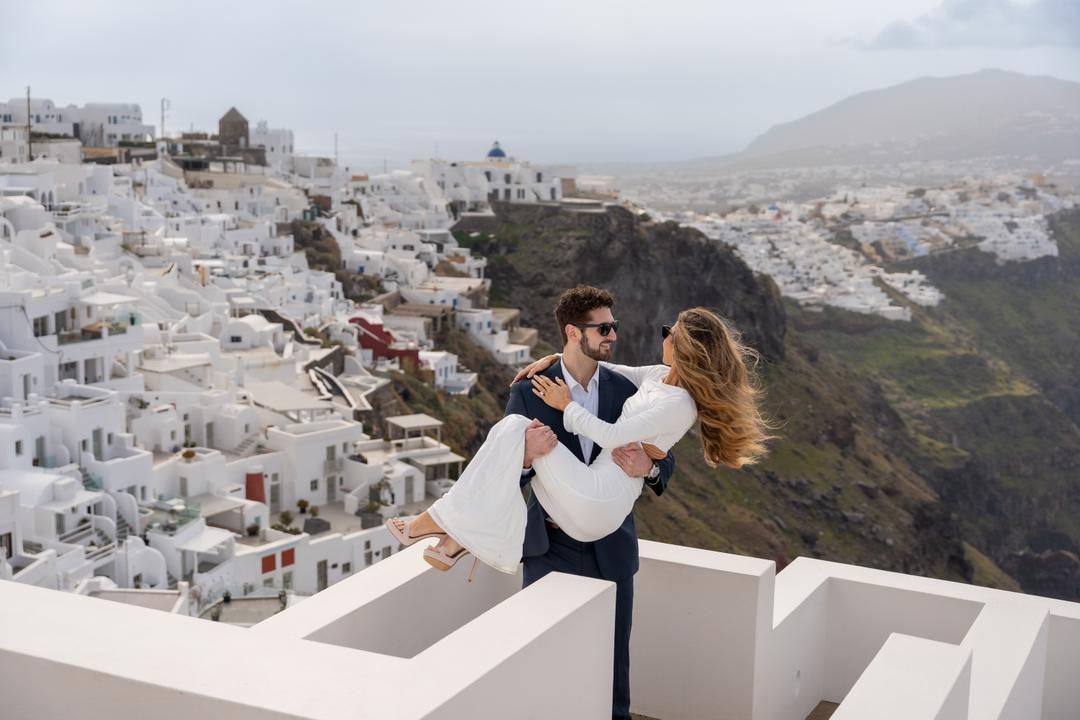
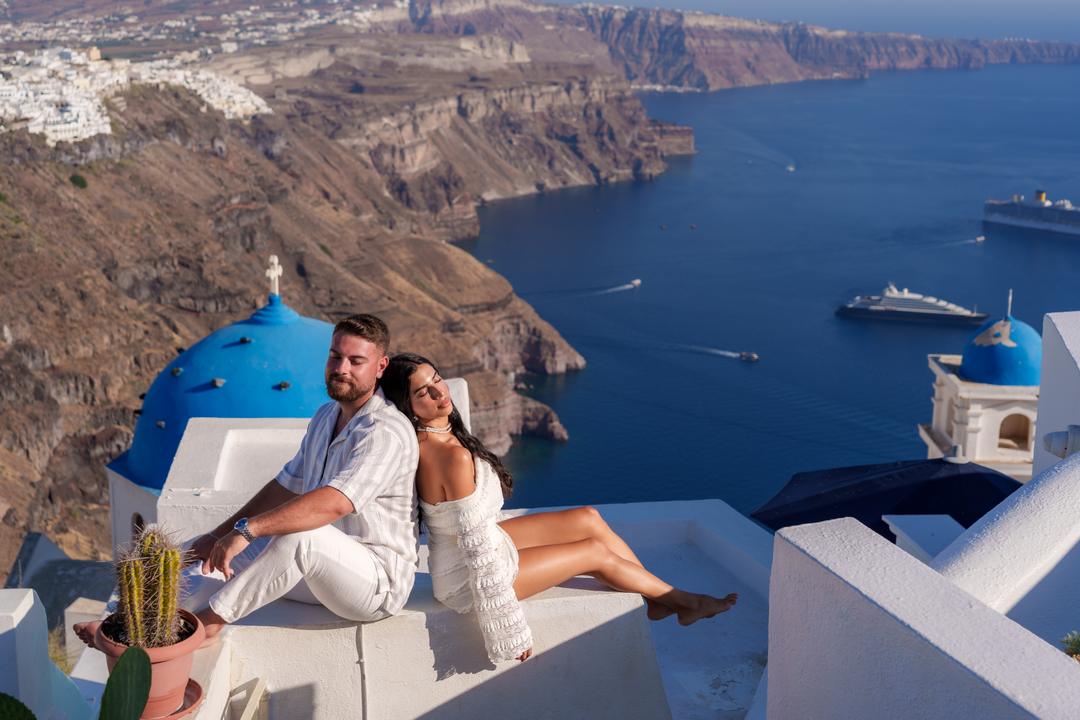
Where the castle looks out, the windmills look back. Stand here and Oia arranges itself in silhouette against the western sky — stacked whitewash, the domes, the sun descending behind all of it — while the seaward side stays open and bright. The ground is a level clifftop path, no stairs, no scramble, with the head of the Ammoudi stairway falling away just below. It suits couples who want the sunset hour inside Oia and refuse to spend it defending a rail.
The record's curve belongs to the castle terraces, and the row sits off that center of gravity: the crush concentrates at the ruins while this stretch keeps room to breathe. The trade is shelter — this is exposed cliffline, and on a meltemi evening the wind arrives before the light does. Level footing throughout, and the stairs down to the bay begin steps away, which matters for what comes after the yes.
The quieter rails toward Londsa
The west path keeps going past the crowd, and the rails along it face the same sunset the castle does. What changes is the physics: this is a route rather than a destination, so people move through instead of settling, and a stretch of rail occupied one minute stands empty the next. The panorama is nearly identical, the elevation the same, the marble underfoot the same. It suits couples who want the open-sea frame without a contest, and without climbing anything to get it.
The register calls these the quieter rail sections, and the qualifier is the point: quieter, never empty. The ninety-minute curve applies to the terraces, not the path, so the timing pressure here is real but softer — presence, not siege. Full western exposure carries the same wind reading as the crest. The walking is flat and stays flat.
The lanes below the marble walkway
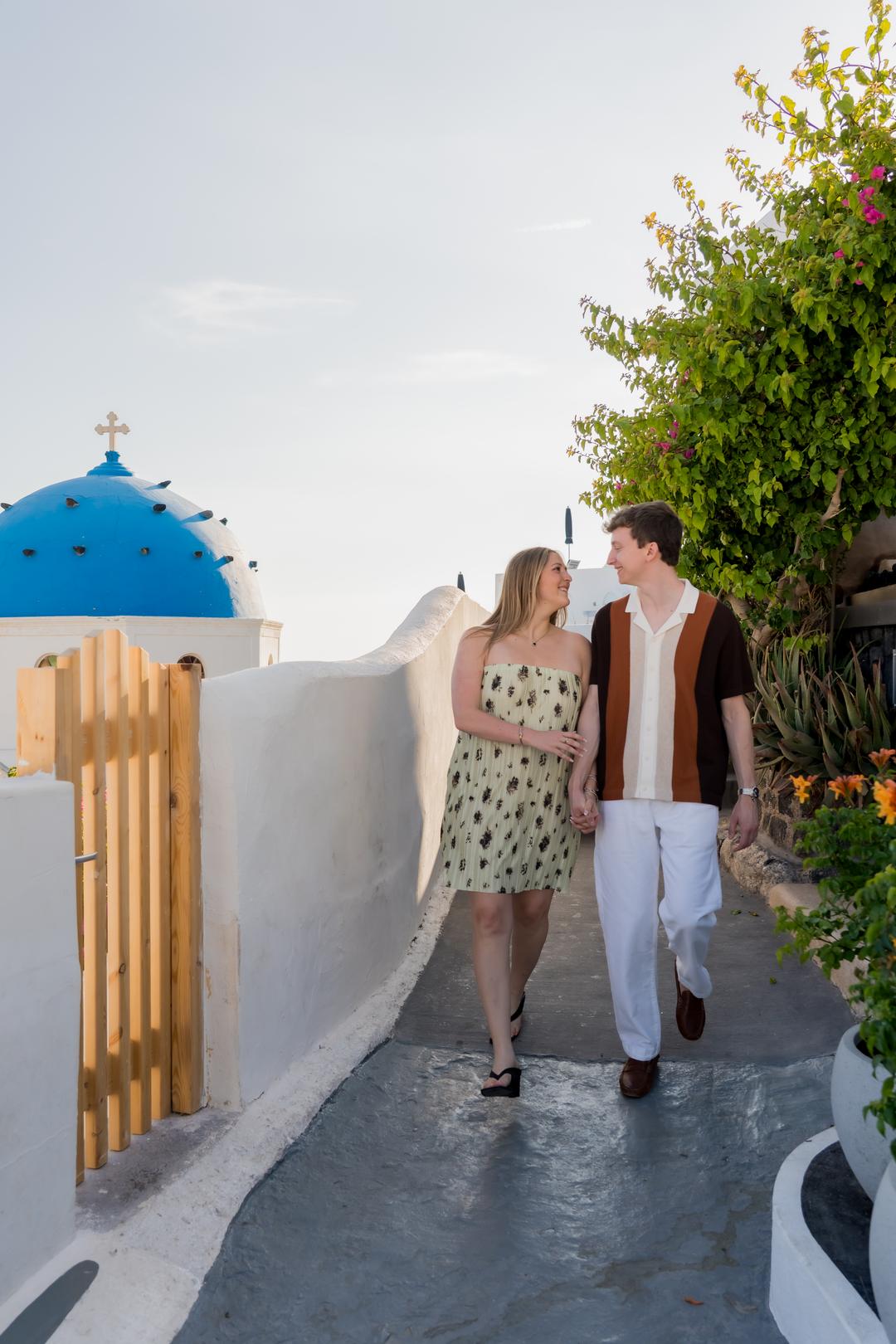
Two staircases down from the main flow, the village becomes itself again: plaster corridors, painted gates, a dome framed at the end of a lane instead of spread across a horizon. Residents and cats, mostly. A proposal here happens inside Oia rather than at its edge, with the photographer working from a landing above — an architecture picture with two people in it. It suits couples who care more about the village than the sun, and anyone whose date turns out windy.
Two entries in the record both point down here. Its framed-dome views belong to these lanes, and its weather escape runs the same direction — when the wind is up, drop below the rim, and the rooflines overhead do the blocking. The footing is stair lanes throughout, and the marble polishes slick, so soles matter more here than they do up top.
What does each ground do with wind, light and crowd?
Read across the four rather than down them and the terrain starts stating relations instead of descriptions. Crowd first, since it is the variable most often talked about as though it were weather. It is not weather. It is a local phenomenon with an address, and the address is the castle terraces — the density the register measures was measured there and holds for nowhere else in this village. The other three grounds receive only what spills, and they receive it at different rates: the windmill cliffline least, lying off the axis people walk to reach the ruins; the Londsa path steadily but lightly, because a route is occupied and then vacated by the same person; the lanes hardly at all, being somewhere people live rather than somewhere people photograph. What the four do share is the release. When the terraces let go they let go together, and the emptiness moves outward through the village instead of staying where it was made.
Light is the second variable and it is structural here, not seasonal. The castle crest and the Londsa rails stand with nothing between them and the source, so their light arrives whole, directional and unmediated — generous to a horizon, punishing to a face. The windmill row has the village itself standing in the way of that source, which means what reaches you is an edge rather than a wall, with whitewash behind you doing the filling. The lanes take no direct sun at any hour: theirs is bounced, plaster to plaster, wall to wall, which is why a lane looks much the same through a whole afternoon while the rim's appearance changes under you.
Wind is the third, and the only one of the three that can cancel a design rather than reshape it. Oia's exposure reads three of five in the register, and that figure describes the rim. Three of these grounds are the rim. The castle crest, the windmill cliffline and the Londsa rails meet the same air from the same quarter with the same nothing in front of them, and the differences between them are differences of degree too small to plan against. The fourth is not a milder version of the same thing. The lanes sit beneath the rim's shoulder with built mass overhead, and what that buys is not a better score but a change of category — and the stairway does not stop there either, since it keeps descending until the terrain changes species altogether at Ammoudi Bay. Degree against category is the whole of what ground can tell you about wind.
None of that says which of the four to stand on, and it is not meant to. Terrain describes what a place is; deciding which place suits which hour of which evening is a scheduling call, and it is made on the village guide, where the curve is printed hour by hour and the ground arrives attached to your date. Read the other way around — an evening designed from the drop outward rather than from the ground up — the sunset-first service starts at the minute and chooses terrain last.
If the honest conclusion is that no corner of Oia fits your date, the register keeps neighbors for exactly this case: Firostefani holds the postcard geometry with gentler numbers, the Three Blue Domes viewpoint at first light gives the famous frame before the island wakes, and the anti-crowd guide runs this same reasoning across the whole island. Choosing a different terrain is not retreat. It is the dossier doing its job.
Questions the ground itself answers
Which spot holds up best when the meltemi is running?
The lanes below the marble walkway, and it is not close. They are the only one of the four that sits under the rim's shoulder rather than on it, and the register's bad-weather instruction points the same direction: when the wind is up, drop below the rim. The castle crest, the windmill row, and the Londsa rails all take the meltemi at full strength. If even the lanes feel rough, keep descending — the stairway to Ammoudi ends at sea level, where the cliff itself becomes the windbreak.
When is the quietest month to have these spots nearly to ourselves?
April. The register's crowd curve runs May through October, and April is the one month on Oia's recommended list that falls outside it: the light already stretches long, and the terraces never approach their summer density. October sits inside the curve's final weeks, so April stands alone. In any month, though, the surest solitude is structural rather than seasonal — the first hours after sunrise, when all four terrains are equally yours.
Which spots shoot into the village, and which shoot out to sea?
The castle ruins and the Londsa rails face outward: open water, the falling sun, horizon frames that render a couple small against the light. The windmill row reverses the camera — you stand seaward of the village and shoot back into it, so Oia's silhouette becomes the backdrop and the sunset becomes the lighting rather than the subject. The lanes below the walkway shoot inward and upward: framed domes, plaster geometry, no horizon at all. If you already know which photograph you want, that photograph has chosen your spot.
What are the spots like after dark, once the crowd drains away?
Transformed, and quickly. The terraces shed their audience within about twenty minutes of the sun going, and the quiet spreads down the paths from there. The castle rail that was contested at seven is nearly private by nine; the windmill row goes still against a sky that keeps its color a while longer; the lanes below the walkway simply return to the residents. There is no sun left to photograph, but there is a village — lamplit, warm-walled, moving at its own pace. Some couples prefer this hour to the show that preceded it.
Tell us the date. We will hold the light.
One conversation is enough to know whether we are the right house for your proposal. No pressure, no scripts — just an honest read on your dates.
Prefer to write first? WhatsApp us at +30 694 4803339 — a planner replies, not a bot.