The photographer you get to talk to
A Santorini engagement photographer works in the open, so the craft shifts from concealment to direction, reading light and putting two people at ease. This page is about the person behind that direction: how instructions actually sound, how the first nervous minutes are handled, and what the working relationship feels like from enquiry to gallery.
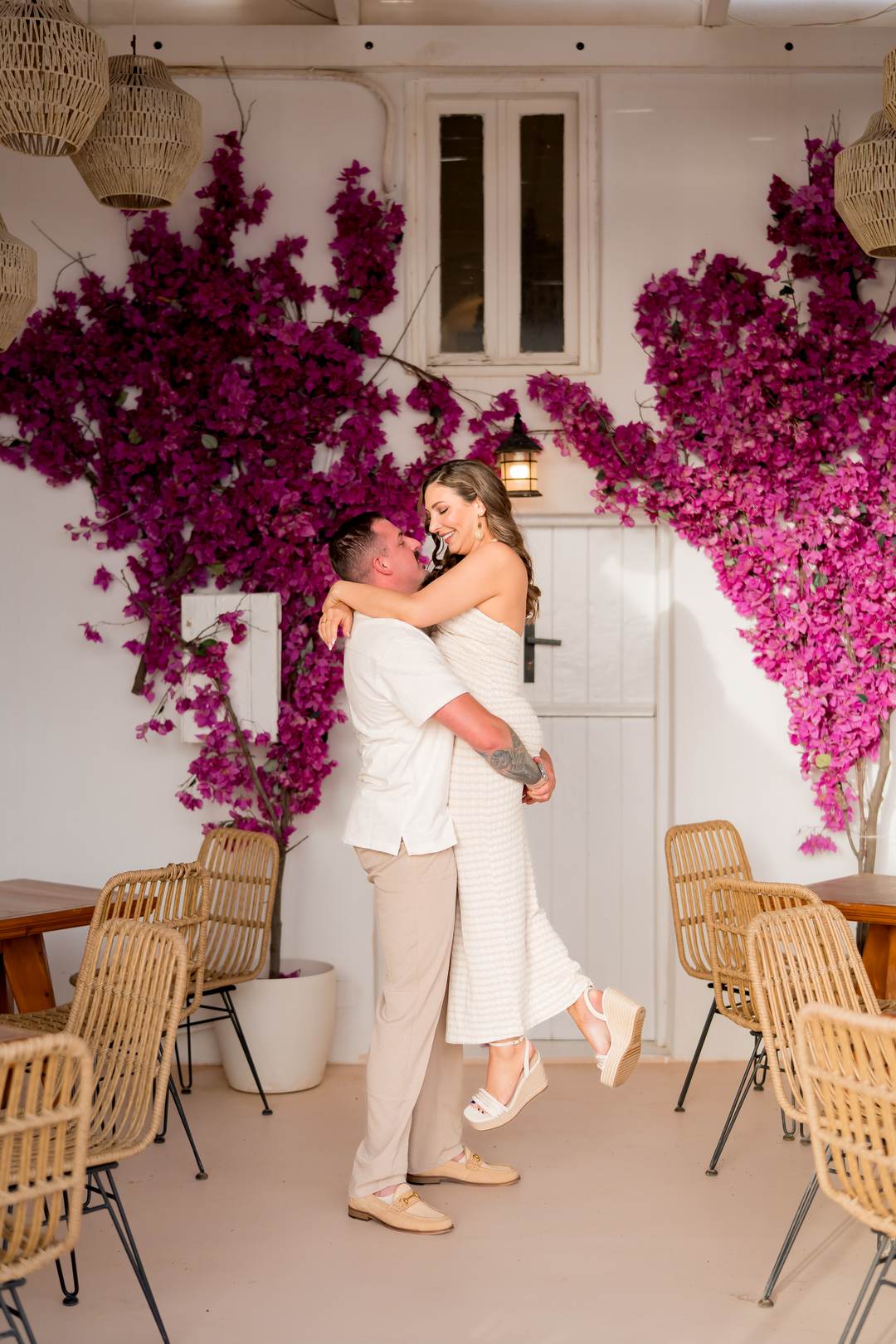
The last photographer this house wrote about is one you were never meant to notice — the secret shooter of the proposal evening, whose whole art is being somewhere you would not think to look. This page is about their opposite number. The engagement photographer walks up, shakes your hand, asks how the proposal went, and then spends the entire evening in open conversation with you. When there is no secret left to protect, the craft stops being about staying out of sight and becomes about what a photographer can do while standing right in front of you: direct. That single change rewires everything — where the camera goes, what gets said, and who controls the clock.
What reverses when the hiding stops
Where the camera stands
On the secret evening, the camera keeps its distance and borrows whatever the setting offers to pass unremarked.
In the open, the only question is where the light wants the camera. The photographer circles you at conversational range, drops to a knee for a low angle, climbs three steps for a high one, and repositions mid-thought without a second glance from anyone. Distance becomes a creative choice rather than a survival requirement — which is why open sessions produce the close, detailed portraiture the proposal evening structurally cannot.
What gets said
Before a proposal, the whole briefing happens days ahead, and while the camera works, nobody exchanges a word.
Here, direction is a running, quiet conversation. You are told where to pause, when to slow the walk, which shoulder to turn toward the sea, when to look at each other and when to forget the lens exists. None of it is barked, and most of it arrives two or three words at a time. Your job shrinks to listening and being together — which happens to be the exact state that photographs best.
Who sets the tempo
A proposal grants the camera one take, because the moment itself will never run twice for anyone.
An open session owns its clock. If a frame almost worked, you walk the lane again. If a gust ruins the hair, you wait it out and laugh. If one of you needs a minute, the minute is taken without ceremony. Nothing rides on a single unrepeatable second, so the whole evening breathes — and ease, once it arrives, shows in every frame that follows it.
What does direction actually sound like?
Smaller than you imagine. The instructions that shape a session are almost all physical and almost all brief: slow the walk by half. Chin toward the water. Swap hands. Again, but closer together. Tell him the thing you told me earlier. Big speeches about feeling the moment do not appear, because a good director never asks you to perform an emotion — they give you something concrete to do, and the doing reads as truth on camera while pretending never does.
Much of it happens in motion. You are sent down a lane toward the lens and told to talk to each other on the way; the photographer works while you cover the ground. And then there are the deliberate withdrawals — the moments the photographer says ignore me now, steps back out of your exchange, and keeps shooting. The frames from those stretches, the in-between ones nobody arranged, are consistently the ones couples enlarge. A browse through the gallery will show you how many of them there are.
What they carry is modest on purpose: a wide lens for the lanes, a long one for compression against the caldera, a spare body, and the unglamorous rest — a cloth for sea spray, clips for a stubborn strap, a small light for the minutes after the sun drops, water for you. The kit stays light because the photographer moves constantly, and because nothing kills a relaxed session faster than waiting on equipment.
Nobody is a natural for the first ten minutes
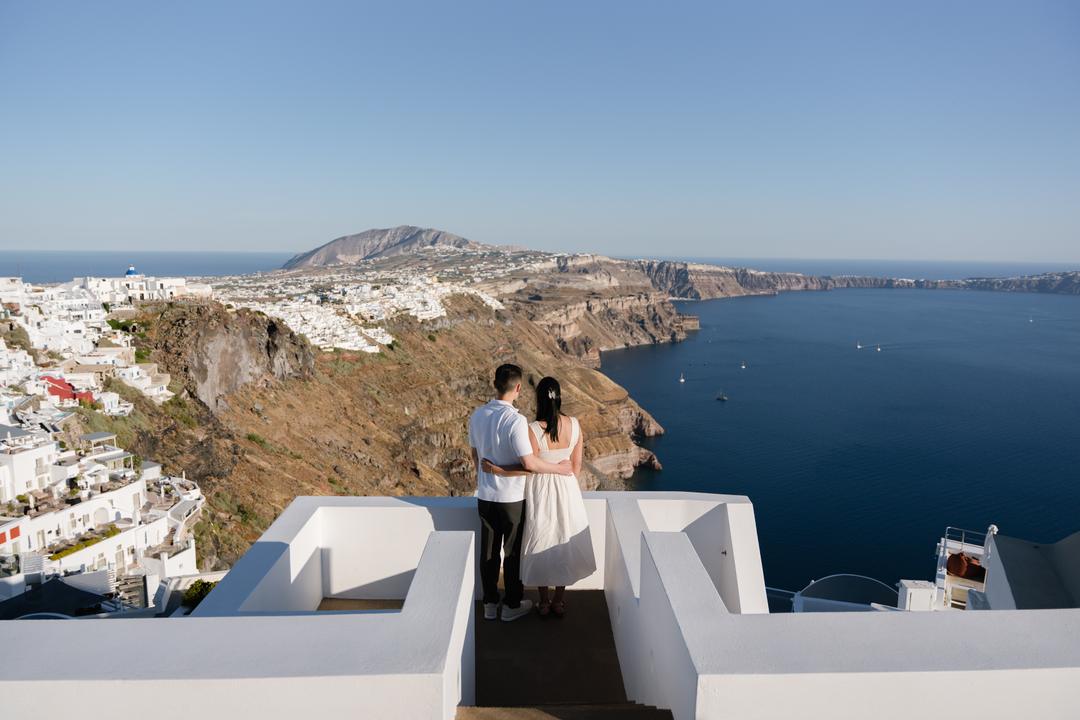
Nearly every couple says the same thing at the planning call: we are awkward in front of a camera. The photographer plans for this rather than hoping around it. Sessions open with movement tasks, not portraits — walking, climbing a stair, reading a menu you will never order from — because motion gives your hands and eyes a job and takes self-consciousness off both. The lens starts long, working from farther away, and comes closer only as ease arrives. The early frames are treated as warm-up and judged accordingly.
The talking matters as much as the tasks. A photographer who chats — about the island, about the proposal, about anything but the pictures — keeps your faces in conversation mode instead of photograph mode, and conversation mode is where people look like themselves. By the second setting, almost every couple has stopped performing. That dissolve is not luck; it is the most practiced part of the job, refined across hundreds of evenings with people who swore they would be the exception.
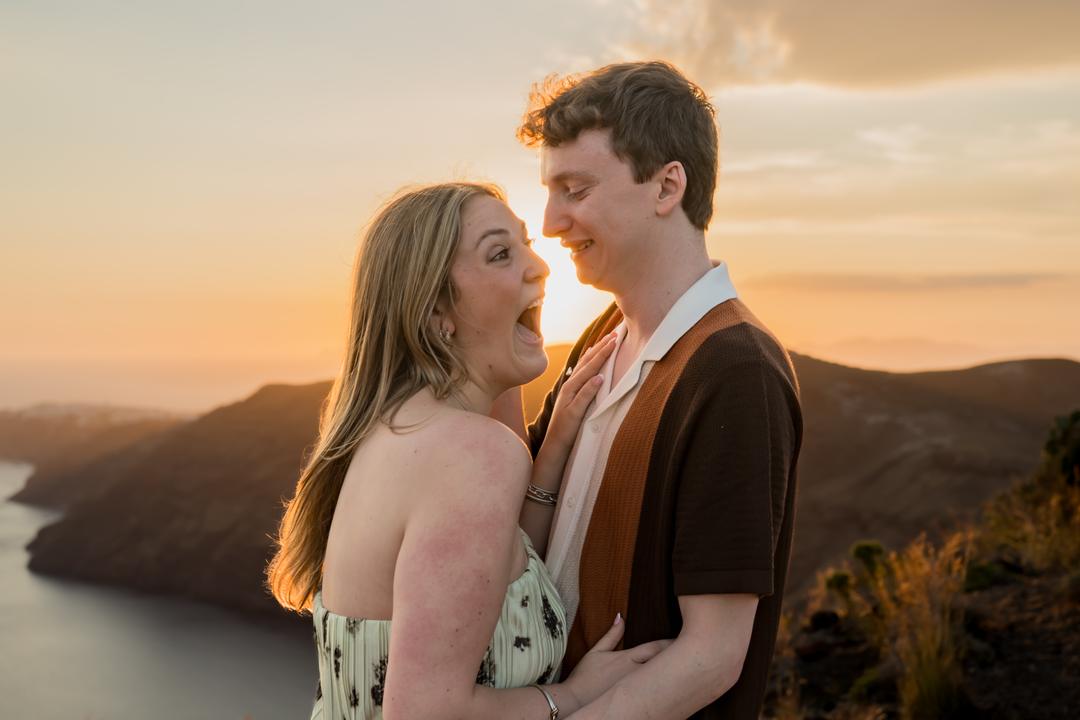
When engaged couples book this
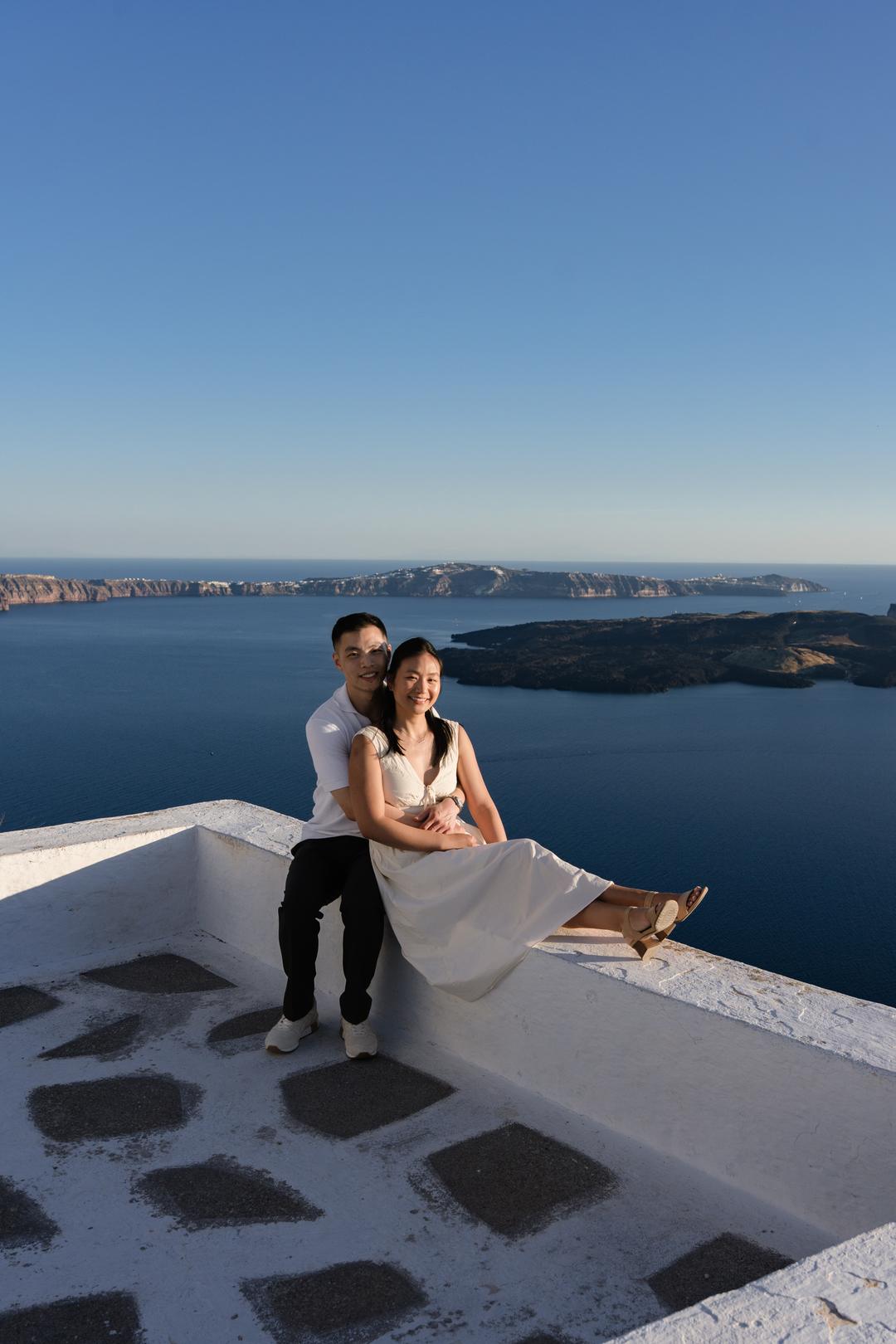
Three patterns account for nearly everyone. The largest group proposes here and shoots the following day, rested and unhurried — the session itself, its walking structure and its timing logic, lives on the engagement photoshoot page; this page is about the person you will spend that time with, and what arrives afterward is the delivered set's own subject. The second group got engaged at home and brought the engagement to the island: no proposal event with us at all, just the session, booked standalone. The third returns — anniversary trips, first trips as a married couple — wanting the same open, directed evening with a few more years in it.
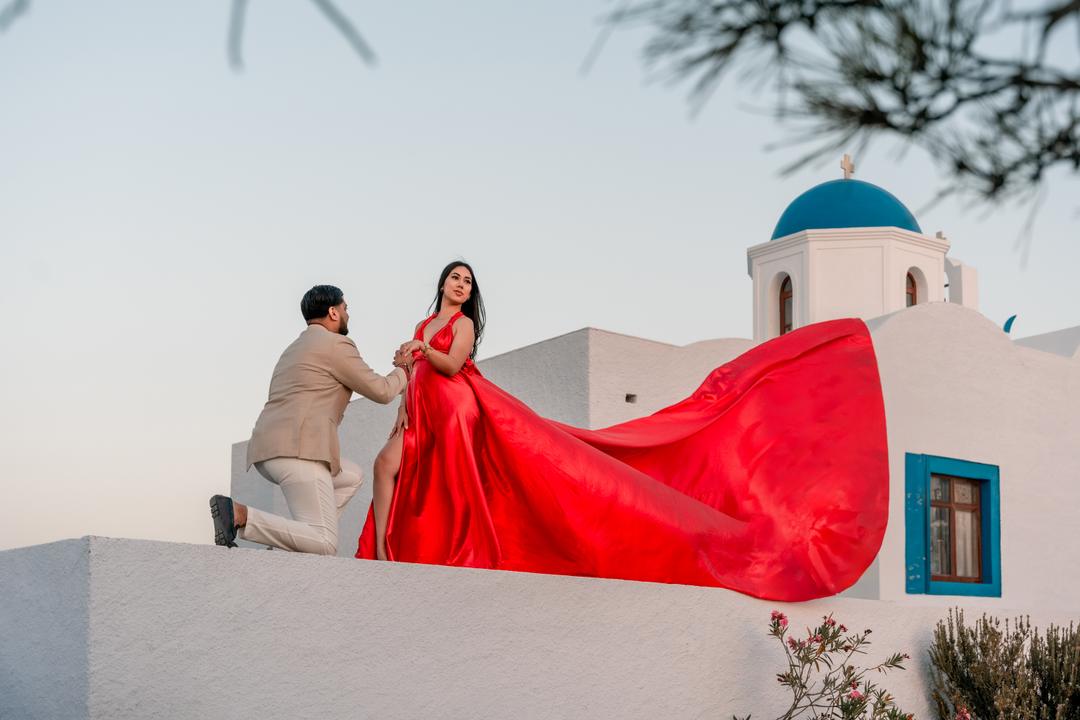
Couples who want one theatrical look inside an otherwise relaxed session usually reach for the gown with the trailing hem; the flying dress page covers its particular mechanics, which are real but solvable. Everything else — dates, the planning call, and pricing, which sits with the packages and the enquiry rather than on this page — starts with a short message through the contact page. Tell us which evenings you are on the island and whether the ring is already public; the answer shapes which of our photographers you should meet.
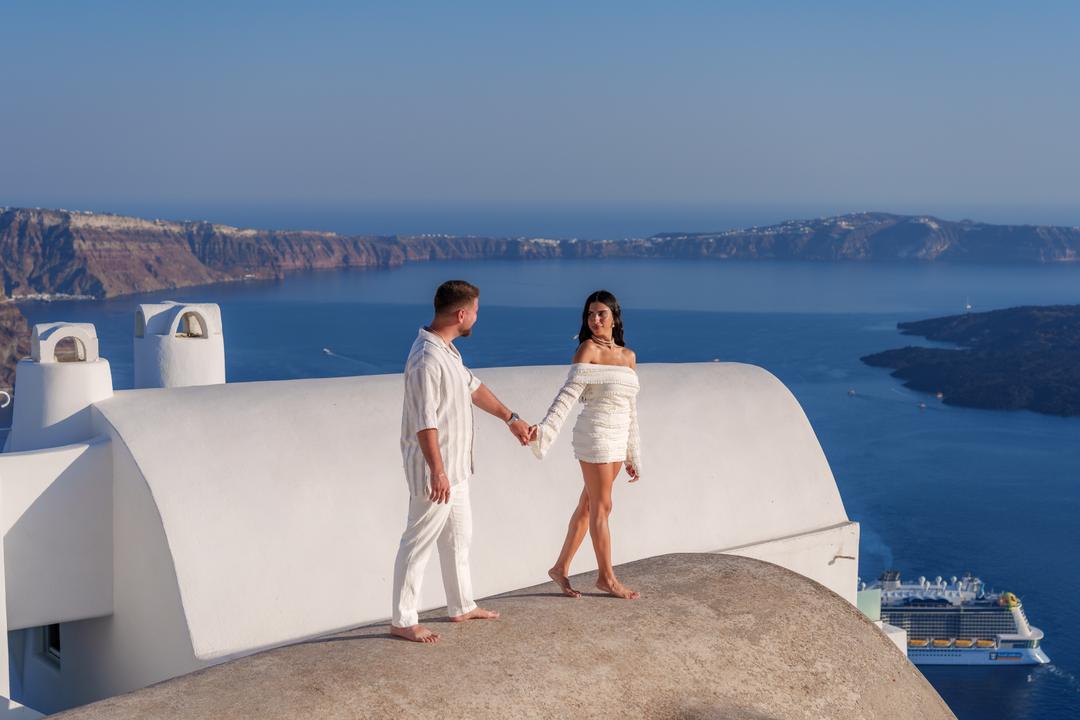
The working relationship, examined
Is the session posed or documentary — how much direction really happens?
Both, in a deliberate rhythm. Direction builds the scene: a place to stand, a way to walk, a line to whisper. Documentation then harvests what the scene produces, including everything you do that was never asked for. Couples reviewing their galleries usually cannot tell which frames were directed and which simply happened — which is the measure of direction done well. It disappears into the result.
How many looks and settings honestly fit one session?
Fewer than most couples plan. Two looks is the honest ceiling, and two or three distinct settings; every addition beyond that trades shooting minutes for logistics minutes at a poor rate. Expect the photographer to say this plainly at the planning call. Part of what you are hiring is a person willing to tell you no when a no protects the gallery you will actually keep.
Can family or friends join some of the frames?
Yes, as a chapter rather than a theme. The pattern that works: the two of you carry most of the session, and parents or friends step in for a short set at an agreed point near the end, then step out again. The photographer directs the group the same way they direct you — quickly, warmly, in plain words — so nobody stands in a stiff row wondering where to put their hands.
What may we do with the files — printing, albums, sharing?
Anything personal, without asking. The edited photographs arrive at full resolution with no watermark, and the license covers printing at any size, album production, framing and sharing wherever you like. The single carve-out is commercial use — a brand campaign would need its own conversation. And if we ever want to feature your session on this site, we ask you first, in writing; no is a complete answer.
What language is the direction given in?
English or Greek as standard, and the direction itself is built to survive translation: it is physical — a demonstration, a gesture, a walked example — far more than it is spoken. Couples who would be more at ease in another language should say so at the enquiry stage; where the language genuinely matters, we match you with the photographer whose languages fit and confirm it on the planning call before anything is fixed.
Tell us the date. We will hold the light.
One conversation is enough to know whether we are the right house for your proposal. No pressure, no scripts — just an honest read on your dates.
Prefer to write first? WhatsApp us at +30 694 4803339 — a planner replies, not a bot.